As an Amazon Associate I earn from qualifying purchases.
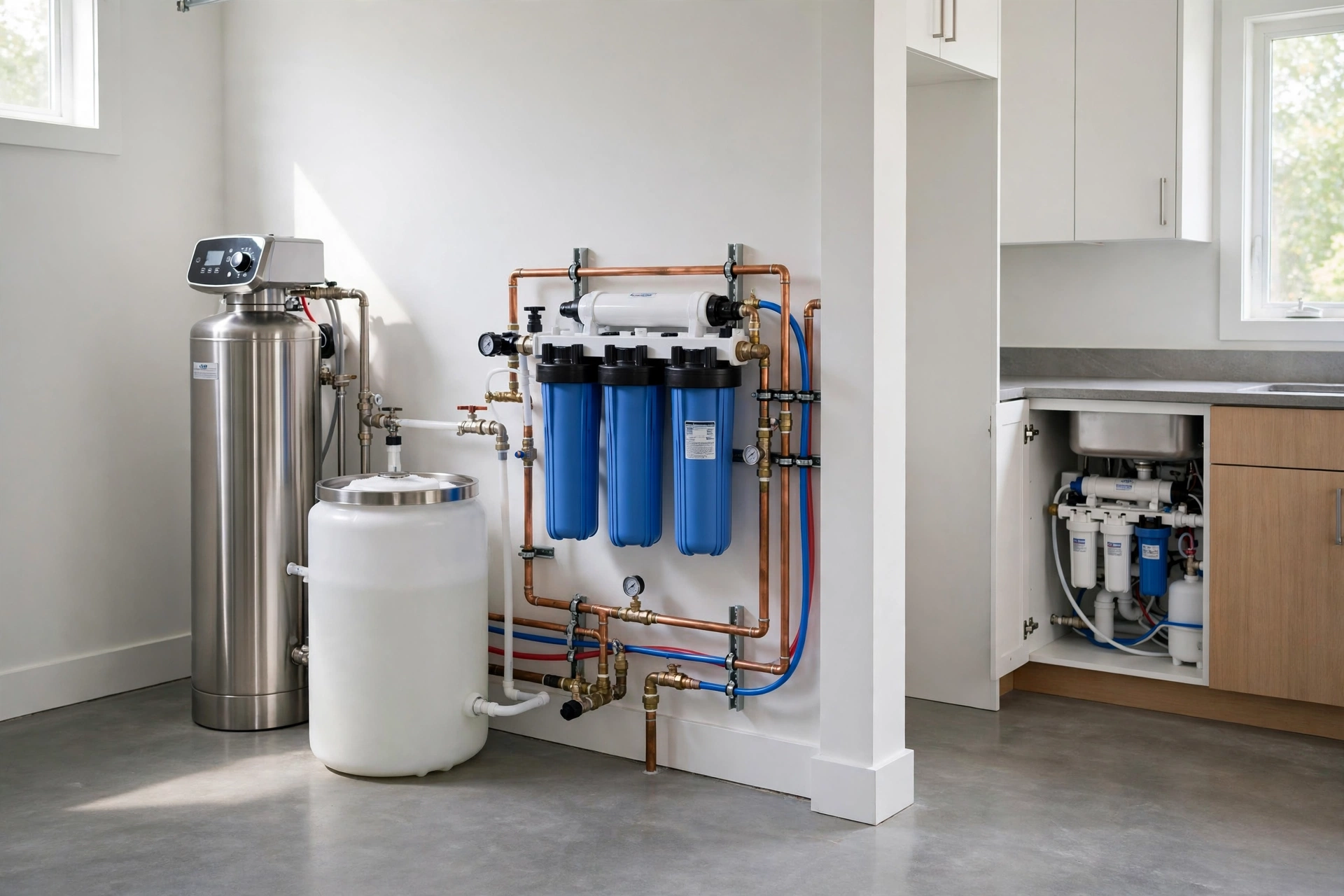
Ultimate Water Treatment Setup: Softener, RO, and Accessories
Ultimate Water Treatment Setup: Softener, RO, and Accessories Whole-house water softeners paired with point-of-use reverse osmosis (RO) systems provide compr...
Review
Ultimate Water Treatment Setup: Softener, RO, and Accessories
Ultimate Water Treatment Setup: Softener, RO, and Accessories Whole-house water softeners paired with point-of-use reverse osmosis (RO) systems provide compr...
Fast answer
Combining a whole house water softener with a reverse osmosis (RO) system offers comprehensive water treatment that protects plumbing and delivers pure drinking water. This guide covers how to choose, install, and maintain the optimal setup for your home.
- A proprietary 'Whole-House Water Treatment Decision Framework'—a flowchart/matrix that guides readers from their water test results to a customized system recommendation, integrating both softener and RO needs. This solves the core content gap of treating these systems in isolation.
- NSF/ANSI Standard 44 certifies cation exchange water softeners for removing calcium and magnesium. Source: https://qualitywatertreatment.com/pages/what-are-nsf-certified-best-value-water-softener-systems
- GE 30,000 Grain water softener costs $499. Source: https://qualitywatertreatment.com/pages/what-are-nsf-certified-best-value-water-softener-systems
- Whirlpool WHES40E water softener costs $739 and has a 40,000-grain capacity. Source: https://qualitywatertreatment.com/pages/what-are-nsf-certified-best-value-water-softener-systems
- Aquasana SimplySoft® costs $799.99 and has a 95 GPG capacity. Source: https://qualitywatertreatment.com/pages/what-are-nsf-certified-best-value-water-softener-systems, https://softprowatersystems.com/pages/ultimate-comparison-of-water-softeners-guide
Our top picks
Ultimate Water Treatment Setup: Softener, RO, and Accessories
Whole-house water softeners paired with point-of-use reverse osmosis (RO) systems provide comprehensive water treatment. This combination protects your plumbing from scale and delivers purified drinking water. Expect to invest $1,500 to $5,000 for purchase and professional installation, plus $200 to $500 annually for maintenance. Begin with a detailed water test to tailor your system precisely.
Do I Need Both a Water Softener and an RO System?
If your water hardness exceeds 7 grains per gallon (GPG) and contains contaminants such as lead, arsenic, or elevated total dissolved solids (TDS), both systems are necessary. A water softener removes hardness minerals—calcium and magnesium—to prevent scale buildup. An RO system filters a broad spectrum of contaminants, ensuring safe drinking water.
Water softeners extend the lifespan of plumbing and appliances by preventing scale damage. RO systems remove heavy metals, nitrates, microbes, and other impurities that softeners cannot address. Together, they provide softened water throughout your home and purified water at drinking points.
Contrary to myths, RO water is not "too pure." Systems like the iSpring RCC7AK include alkaline remineralization stages that restore healthy minerals and enhance taste.
Installing a softener before the RO system protects the RO membrane from scale buildup, extending its life and reducing maintenance costs.
What's the Correct Installation Order for Softener and RO?
Always install the whole-house water softener before the RO system. Hard water damages RO membranes rapidly, leading to frequent replacements and reduced efficiency.
The ideal plumbing sequence is:
Main Water Line → Sediment Pre-filter → Water Softener → House Plumbing → RO System (usually under the kitchen sink).
Pre-filters remove sediment and chlorine, protecting the softener’s valve and resin bed. Softened water entering the RO system prevents scale buildup on the membrane, ensuring longer membrane life and optimal water flow.
If water pressure drops below 40 psi after softening, install an RO booster pump to maintain filtration performance.
| Component | Purpose |
| Sediment Pre-filter | Removes dirt and particles before softener |
| Water Softener | Removes hardness minerals (Ca, Mg) |
| House Plumbing | Delivers softened water to fixtures |
| RO System | Purifies drinking water at point-of-use |
Water Testing and Interpretation
Before installation, conduct a comprehensive water test. Use certified laboratories or reliable home test kits to measure hardness (GPG), iron, manganese, chlorine, pH, TDS, and microbial contaminants. Interpret results as follows:
- Hardness >7 GPG: Softener recommended.
- Iron >0.3 ppm or sulfur smell: Iron filter needed.
- Chlorine/chloramine presence: Carbon pre-filter required.
- High TDS or heavy metals: RO system essential.
Testing ensures the system matches your water’s specific challenges.
How Much Does a Combined Softener and RO Setup Cost?
A combined whole-house softener and point-of-use RO system typically costs $1,500 to $5,000 upfront, with annual maintenance between $200 and $500. Well water setups and professional installations increase costs.
| Cost Category | Budget Range | Mid-Range | Premium |
| Water Softener Unit | $499 (GE 30,000 grain) | $739 (Whirlpool WHES40E) | $799.99+ (Aquasana SimplySoft) |
| RO System Unit | $150 - $300 | $300 - $600 | $600+ (iSpring RCC7AK) |
| Installation | $700 - $1,500 | $1,500 - $2,500 | $2,500 - $3,800+ |
| Annual Maintenance | $100 - $200 | $200 - $300 | $300 - $500 |
Cost-Benefit Analysis
Investing in a combined system reduces plumbing repairs, extends appliance life, lowers soap and detergent use, and improves health by providing clean, softened water. DIY installation can save money but requires plumbing expertise and may void warranties.
Total Cost of Ownership (TCO) Over 5 Years
- Equipment and installation: $1,500–$5,000
- Maintenance (salt, filters, servicing): $1,000–$2,500
The benefits include fewer plumbing issues, improved appliance efficiency, and better water quality.
How Do I Choose the Right Size Water Softener?
Size your softener based on hardness, household water use, and regeneration frequency using this formula:
Water Hardness (GPG) × Daily Water Use (gallons) × Days Between Regenerations = Grain Capacity Needed
Example: For 4 people using 75 gallons each daily, with 10 GPG hardness and 7-day regeneration:
10 × (4 × 75) × 7 = 21,000 grains capacity
High-capacity models like Aquasure Harmony Series 48 (48,000 grains) or Aquasana SimplySoft (95 GPG capacity) suit severe hardness or larger households. Single-tank systems regenerate periodically; dual-tank systems provide continuous soft water.
| Feature | Importance |
| Grain Capacity | Matches household water hardness |
| Control Valve Type | Affects regeneration efficiency |
| NSF Certification | Ensures safety and performance |
| Salt Efficiency | Lowers operating costs |
Grain Capacity Formula Infographic
An infographic illustrating the grain capacity formula with a practical example helps visualize sizing.
How Do I Choose the Right RO System for My Home?
Most homeowners benefit from a point-of-use under-sink RO system rather than whole-house RO, which can exceed $10,000 and is often unnecessary. RO systems focus on drinking and cooking water purification.
Look for multi-stage filtration like the iSpring RCC7AK, which offers 6 stages including alkaline remineralization for balanced pH and improved taste. Key specs include gallons per day (GPD) output, waste water ratio, and filter change indicators.
Softened water does not affect RO sizing since RO capacity depends on drinking water needs, typically 50–75 GPD for a family.
| RO System Feature | Description |
| Filtration Stages | More stages = better contaminant removal |
| GPD Output | Daily purified water volume |
| Remineralization | Restores healthy minerals |
| Waste Water Ratio | Efficiency of water use |
Point-of-Use vs. Whole-House RO
Whole-house RO systems are costly and typically unnecessary since RO water is mainly for drinking and cooking. Point-of-use systems installed under the kitchen sink are cost-effective and sufficient for most households.
Are There Different Considerations for City Water Versus Well Water When Setting Up These Systems?
City water typically requires chlorine/chloramine removal and hardness softening. Well water often contains iron, manganese, sulfur, and bacteria, requiring specialized filtration.
City water treatment sequence:
Sediment and carbon pre-filter → Softener → RO system
Well water treatment sequence:
Sediment pre-filter → Iron filter (if needed) → Softener → RO system (with optional UV sterilization)
Products like AFW Filters IRONPRO 2 combine softening and iron removal, ideal for well water. Aquasana Rhino Well Water systems offer comprehensive filtration for well water contaminants.
Comprehensive water testing is critical for well water to identify specific contaminants and tailor the system accordingly.
Step-by-Step Installation & Integration Guide
- Test your water using certified labs or reliable home kits.
- Select systems based on test results and household needs.
- Plan plumbing layout: main line → sediment pre-filter → softener → house plumbing → RO system.
- Install sediment pre-filter and water softener on the main line.
- Connect softened water line to the under-sink RO system.
- Test output water quality and system pressure.
Plumbing Diagram
A detailed schematic illustrates water flow and component placement, including pre-filters, softener, and RO system with labeled flow directions.
Ongoing Maintenance & Troubleshooting Checklist
| Component | Maintenance Frequency | Typical Cost | Signs Maintenance Needed |
| Water Softener Salt | Every 2-3 months | $20-$50 | Salt bridging, salty taste, scale |
| RO Pre/Post Filters | Every 6-12 months | $30-$100 | Reduced flow, off taste |
| RO Membrane | Every 2-3 years | $100-$200 | Constant running, poor filtration |
Common Issues
- Salt bridge in softener tank: hard crust preventing salt dissolution.
- RO system running constantly: clogged pre-filter or faulty automatic shut-off valve.
- Loss of water pressure: clogged filters or low home water pressure.
Use only RO-specific filters and high-purity salt to maintain system performance and warranty.
Top Product Recommendations for Your Setup
| Product Name | Type | Key Specs | Best For | Price Range |
| Aquasure Harmony Series 48 | Water Softener | 48,000 grain capacity | High hardness, large households | $700 - $900 |
| iSpring RCC7AK | RO System | 6-stage, alkaline remineralization | Balanced pH, improved taste | $600+ |
| AFW Filters IRONPRO 2 | Softener + Iron Filter | Combines softening and iron removal | Well water with iron issues | $1,000 - $1,500 |
| Aquasana SimplySoft | Water Softener | 95 GPG capacity | Severe hardness, salt-efficient | $800+ |
| NuvoH2O Manor | Salt-Free Conditioner | Scale prevention without salt | Salt-free alternative | $600 - $800 |
| Aquasana Rhino Well Water | Whole-House Filter | Multi-stage well water filtration | Well water contaminants | $1,500 - $3,000 |
| GE 30,000 Grain Softener | Water Softener | 30,000 grain capacity | Budget-conscious users | ~$499 |
| Whirlpool WHES40E | Water Softener | 40,000 grain capacity | Mid-range capacity | ~$739 |
Prices vary; check current listings before purchase.
Conclusion
A combined whole-house water softener and point-of-use RO system offers comprehensive water treatment, protecting plumbing and delivering pure drinking water. Start with thorough water testing to select the right components and sizes. Install the softener first to protect the RO membrane. Expect upfront costs between $1,500 and $5,000 and annual maintenance of $200 to $500. Proper maintenance and troubleshooting ensure long-term system performance and water quality.
Visual aids such as plumbing diagrams, grain capacity infographics, and cost breakdown charts enhance understanding and planning for your ultimate water treatment setup.
Recommended Resources
Is a water softener always necessary before an RO system?
Can I install a whole-house water softener and RO system myself, or do I need a professional?
How often do filters need to be changed in an RO system, and how often does a softener need salt?
What are the signs that my water softener or RO system is not working effectively?
What is the difference between salt-based and salt-free softeners, and which is better for an RO setup?
Does softened water affect the taste or quality of RO-filtered water?
Recommended Resources

Lead researcher and home comfort specialist at House By Saay. Specializes in ergonomic design, sleep technology, and consumer product durability analysis.
Sources
- https://softprowatersystems.com/pages/ultimate-comparison-of-water-softeners-guide
- https://qualitywatertreatment.com/pages/what-are-nsf-certified-best-value-water-softener-systems
- https://www.homebuddy.com/costs/water-treatment-system/cost-to-install-water-softener
- https://hellawater.com/average-water-softener-cost-2026-prices-installation-guide/
Comments
Join the conversation
Leave a simple comment about Ultimate Water Treatment Setup: Softener, RO, and Accessories.
No comments yet. Be the first to comment.