As an Amazon Associate I earn from qualifying purchases.
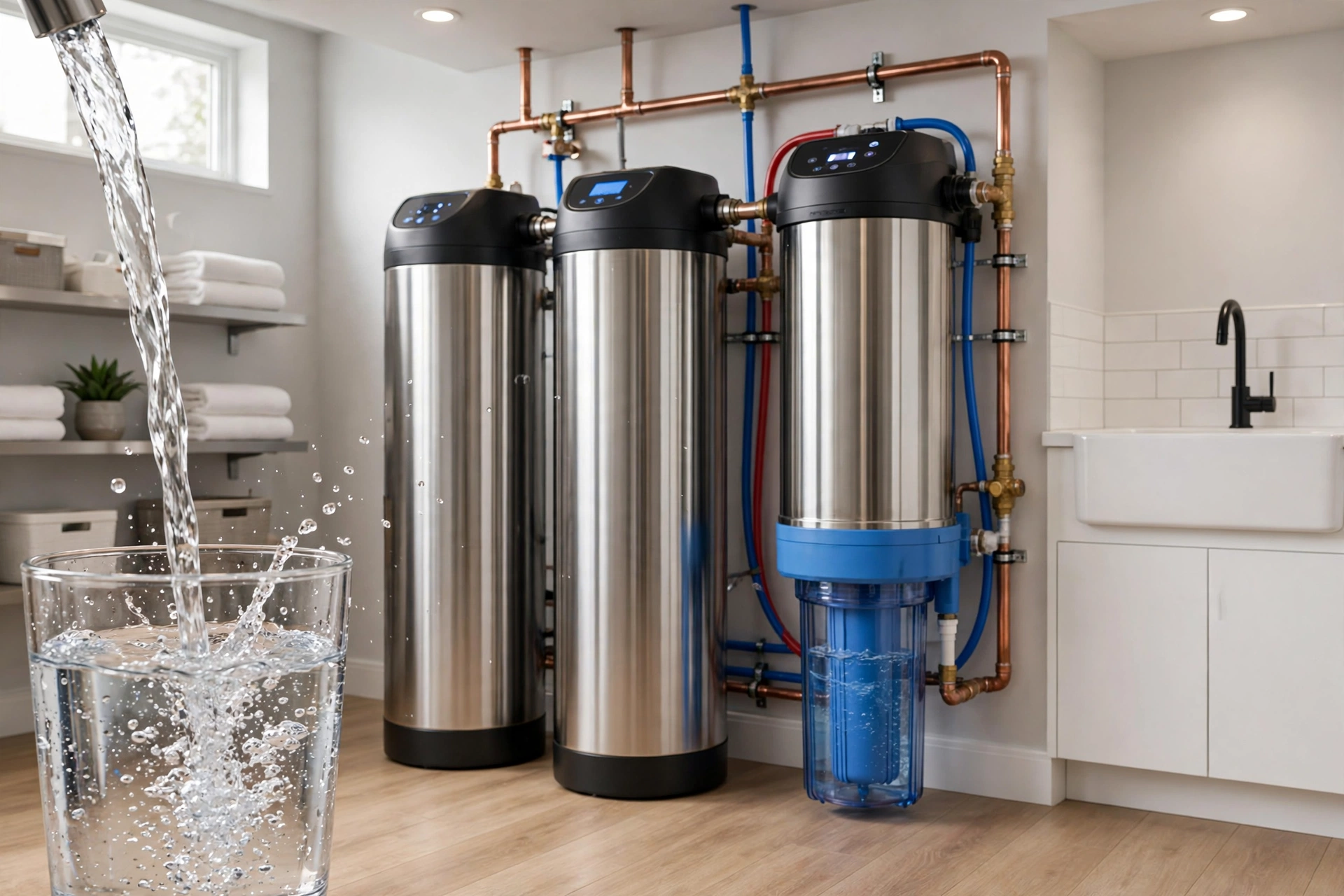
Solve Well Water Iron Stains: Best Combo Filter and Softener Systems
Solve Well Water Iron Stains: Best Combo Filter and Softener Systems Well water iron stains and hardness demand a two-step treatment: first oxidizing and fil...
Review
Solve Well Water Iron Stains: Best Combo Filter and Softener Systems
Solve Well Water Iron Stains: Best Combo Filter and Softener Systems Well water iron stains and hardness demand a two-step treatment: first oxidizing and fil...
Fast answer
Well water iron stains and hardness require specialized treatment combining iron filtration and water softening. This guide explains how combo systems work, what tests you need, and which products deliver the best results for US homeowners.
- A personalized decision framework (flowchart/guide) that readers use to input their specific well water test results (iron ppm, type, hardness gpg) to receive a tailored technology recommendation (e.g., 'Air Injection Filter + Salt-Based Softener' vs. 'Manganese Greensand Filter Only'). This directly addresses the major content gap and common mistake of one-size-fits-all advice.
- NSF/ANSI Standard 44 verifies cation exchange water softener effectiveness in removing calcium and magnesium ions. Source: https://qualitywatertreatment.com/pages/what-are-nsf-certified-best-value-water-softener-systems
- NSF certification involves testing materials, structural integrity, and long-term operational performance of water treatment systems. Source: https://qualitywatertreatment.com/pages/what-are-nsf-certified-best-value-water-softener-systems
- Many local building codes may require NSF certification for water treatment solutions. Source: https://qualitywatertreatment.com/pages/what-are-nsf-certified-best-value-water-softener-systems
- The GE 30,000 Grain water softener is priced at $499. Source: https://qualitywatertreatment.com/pages/what-are-nsf-certified-best-value-water-softener-systems
Our top picks
Solve Well Water Iron Stains: Best Combo Filter and Softener Systems
Well water iron stains and hardness demand a two-step treatment: first oxidizing and filtering iron, then softening the water. Combination filter and softener systems protect plumbing and appliances while eliminating stains effectively.
What causes iron stains in well water and why is a softener alone not enough?
Iron stains result from dissolved ferrous iron oxidizing into solid ferric iron, which deposits as red or orange stains. Standard water softeners cannot remove these iron particles effectively and often become fouled.
Well water iron exists mainly as ferrous (dissolved, clear) or ferric (oxidized, particulate) iron, plus sometimes bacterial iron. When ferrous iron contacts air, it oxidizes into ferric iron, causing staining. Softener resins exchange calcium and magnesium ions but are easily clogged by ferric iron solids. Without a dedicated iron filter or oxidation step, softener resin fouls quickly, reducing efficiency and lifespan. NSF/ANSI Standard 44 certifies softeners for hardness removal only, not iron.
"Iron fouls softener resin, so removing iron first is essential for effective treatment."
How do combination iron filter and softener systems actually work?
Combination systems use a two-tank process: the first tank oxidizes and filters iron, and the second softens water by ion exchange.
The initial tank employs oxidation technologies such as air injection, Katalox media, Birm, or manganese greensand to convert dissolved ferrous iron into solid ferric iron, which is then filtered out. Pre-filters remove sediment to protect media. The filtered water then flows to a salt-based ion exchange softener tank that removes hardness minerals like calcium and magnesium. True all-in-one single tanks are rare and often less effective because iron removal and softening require different media and regeneration processes.
| Oxidation Technology | Description | Iron Type Treated | Notes |
| Air Injection | Injects air to oxidize iron | Ferrous | Requires air compressor or venturi |
| Katalox | Catalytic media filters ferric iron | Ferrous & Ferric | Long-lasting, effective |
| Birm | Catalytic media, no chemicals | Ferrous | Requires proper pH and oxygen |
| Manganese Greensand | Ion exchange media with oxidation | Ferrous & Ferric | Requires regeneration |
"Effective iron removal protects the softener resin and ensures lasting water quality."
What well water test results do you need to choose the right system?
You need a comprehensive water test measuring total iron (ppm), iron type (ferrous or ferric), water hardness (grains per gallon), pH, manganese, and hydrogen sulfide.
Knowing your iron concentration and type determines the required iron removal capacity and media choice. Water hardness guides the softener grain capacity needed. pH affects oxidation media performance. Manganese and hydrogen sulfide presence may require specialized filters.
Testing kits or certified labs provide accurate results. For example, iron above 3 ppm usually requires a dedicated iron filter with catalytic media, while hardness above 15 gpg calls for a high-capacity softener.
| Parameter | Why Test? | Typical Thresholds |
| Total Iron (ppm) | Determines iron removal needs | 0.3 ppm stains; >3 ppm needs strong filtration |
| Iron Type | Ferrous vs. Ferric affects media | Ferrous easier to oxidize; ferric particulate |
| Hardness (gpg) | Softener sizing | 7 gpg considered hard water |
| pH | Media effectiveness | 6.5–8.5 optimal for most media |
| Manganese (ppm) | May require special media | 0.05 ppm needs treatment |
| Hydrogen Sulfide | Odor and corrosion risk | 0.05 ppm requires removal |
"Accurate water testing is the foundation for selecting the right combo system."
For reliable testing, use certified water testing laboratories or well-regarded home test kits. Many labs provide comprehensive well water analysis including iron speciation, hardness, and contaminants.
Salt-based vs. Salt-free combo systems for well water: Which is better?
Salt-based softeners paired with iron filters are the most effective for well water with iron stains and hardness. Salt-free conditioners do not remove iron or hardness ions and cannot prevent iron staining.
Salt-based systems use ion exchange to replace hardness minerals with sodium or potassium ions, effectively softening water and preventing scale. When combined with an iron filter, they remove iron particles before softening. Salt-free conditioners (e.g., Template Assisted Crystallization or citric acid-based) only alter scale formation and do not remove iron or hardness minerals, making them unsuitable for iron stain problems.
| Feature | Salt-Based Combo Systems | Salt-Free Conditioners |
| Iron Removal | Yes, with dedicated iron filter | No |
| Hardness Removal | Yes, ion exchange softening | No |
| Maintenance | Requires salt and media replacement | Low maintenance |
| Environmental Impact | Uses salt, may affect soil | Eco-friendly |
| Cost | Higher initial and operating costs | Lower upfront, less effective |
Potassium chloride can replace sodium chloride for sodium-sensitive households.
"Salt-based combos remain the gold standard for tackling iron stains and hardness in well water."
What key features and certifications should I look for in a well water combo system?
Look for NSF/ANSI 44 certification for water softening performance and NSF/ANSI 42 for particulate and iron reduction. These certifications ensure tested effectiveness, material safety, and compliance with many local codes.
Key specifications include:
- Iron removal capacity (maximum ppm iron treated)
- Grain capacity for hardness removal (e.g., 30,000 to 48,000 grains)
- Flow rate (gallons per minute) matching household demand
- Reliable control valves (e.g., Fleck 5600SXT, Clack) for regeneration and system control
Verify current NSF certifications on manufacturer websites or product labels. High-quality valves and media extend system life and reduce maintenance.
"NSF certifications guarantee your system meets rigorous performance and safety standards."
How do top systems compare for well water iron and hardness?
The best system depends on your water test results. For high iron (>3 ppm), a dedicated iron filter plus softener like the AFW Filters IRONPRO 2 outperforms all-in-one combos. For moderate iron, integrated systems such as the SoftPro™ AIO Iron Master offer convenience with effective iron oxidation and softening.
| Product | Max Iron (ppm) | Grain Capacity | Technology | Best For | Est. Installed Cost |
| AFW Filters IRONPRO 2 | Up to 10 ppm* | 32,000 | Dedicated iron filter + softener | High iron, hard water | $2,500 - $3,500 |
| SoftPro AIO Iron Master | Up to 5 ppm* | 30,000 | Air injection + softener | Moderate iron, compact setup | $2,000 - $3,000 |
| Aquasana Rhino | N/A | N/A | Filter only (no softener) | Iron filtration only | $1,200 - $1,800 |
| Aquasure Harmony 48 | N/A | 48,000 | Softener only | Hard water, low iron | $1,500 - $2,000 |
| GE GXSH40V | N/A | 40,000 | Softener only | Hard water, low iron | $1,000 - $1,500 |
| NuvoH2O Manor | N/A | Salt-free | Salt-free conditioner | Scale prevention only | $700 - $900 |
*Maximum iron removal capacities are approximate; verify with manufacturers for current specs.
"Choosing the right system depends on your iron level, hardness, and household needs."
What are the real costs of installing and maintaining a well water combo system?
Professional installation for a two-tank iron filter and softener combo typically costs between $2,500 and $4,000. This includes equipment, plumbing, and setup.
Annual maintenance costs range from $100 to $300, covering salt replenishment, filter media replacement, and servicing.
| Cost Component | Typical Range | Notes |
| Equipment | $800 - $2,000 | Depends on system size and brand |
| Professional Installation | $500 - $1,500 | Varies by region and complexity |
| Annual Salt | $60 - $150 | For salt-based softeners |
| Annual Media Replacement | $40 - $150 | For iron filter media (Katalox, Birm) |
DIY installation is possible but not recommended for complex well water systems due to plumbing and calibration requirements.
A 5-year total cost of ownership including installation and maintenance typically ranges from $3,000 to $5,500.
"Investing in professional installation and maintenance ensures system longevity and water quality."
Conclusion: Your step-by-step decision and action plan
- Obtain a comprehensive well water test measuring iron (ppm and type), hardness (gpg), pH, manganese, and hydrogen sulfide.
- Use your test results to select the appropriate technology: high iron requires dedicated iron filtration plus salt-based softening; moderate iron may suit integrated combo systems.
- Request quotes for correctly sized systems from reputable dealers.
- Prioritize professional installation to ensure proper setup and warranty compliance.
Following this plan will help you effectively eliminate iron stains and soften your well water for lasting home comfort.
Note: Verify current NSF certifications and maximum iron removal capacities with manufacturers before purchase to ensure compliance and performance.
Recommended Resources
What causes red/orange stains from well water?
Can a water softener alone effectively remove iron stains?
What is the best type of filter for iron in well water?
How often do combo filter and softener systems need maintenance or filter changes?
What is the typical cost of a well water iron filter and softener combo system?
Is professional installation required for well water iron filter and softener combo systems?
Recommended Resources

Lead researcher and home comfort specialist at House By Saay. Specializes in ergonomic design, sleep technology, and consumer product durability analysis.
Sources
- https://softprowatersystems.com/pages/ultimate-comparison-of-water-softeners-guide
- https://qualitywatertreatment.com/pages/what-are-nsf-certified-best-value-water-softener-systems
- https://www.homebuddy.com/costs/water-treatment-system/cost-to-install-water-softener
- https://hellawater.com/average-water-softener-cost-2026-prices-installation-guide/
Comments
Join the conversation
Leave a simple comment about Solve Well Water Iron Stains: Best Combo Filter and Softener Systems.
No comments yet. Be the first to comment.