As an Amazon Associate I earn from qualifying purchases.
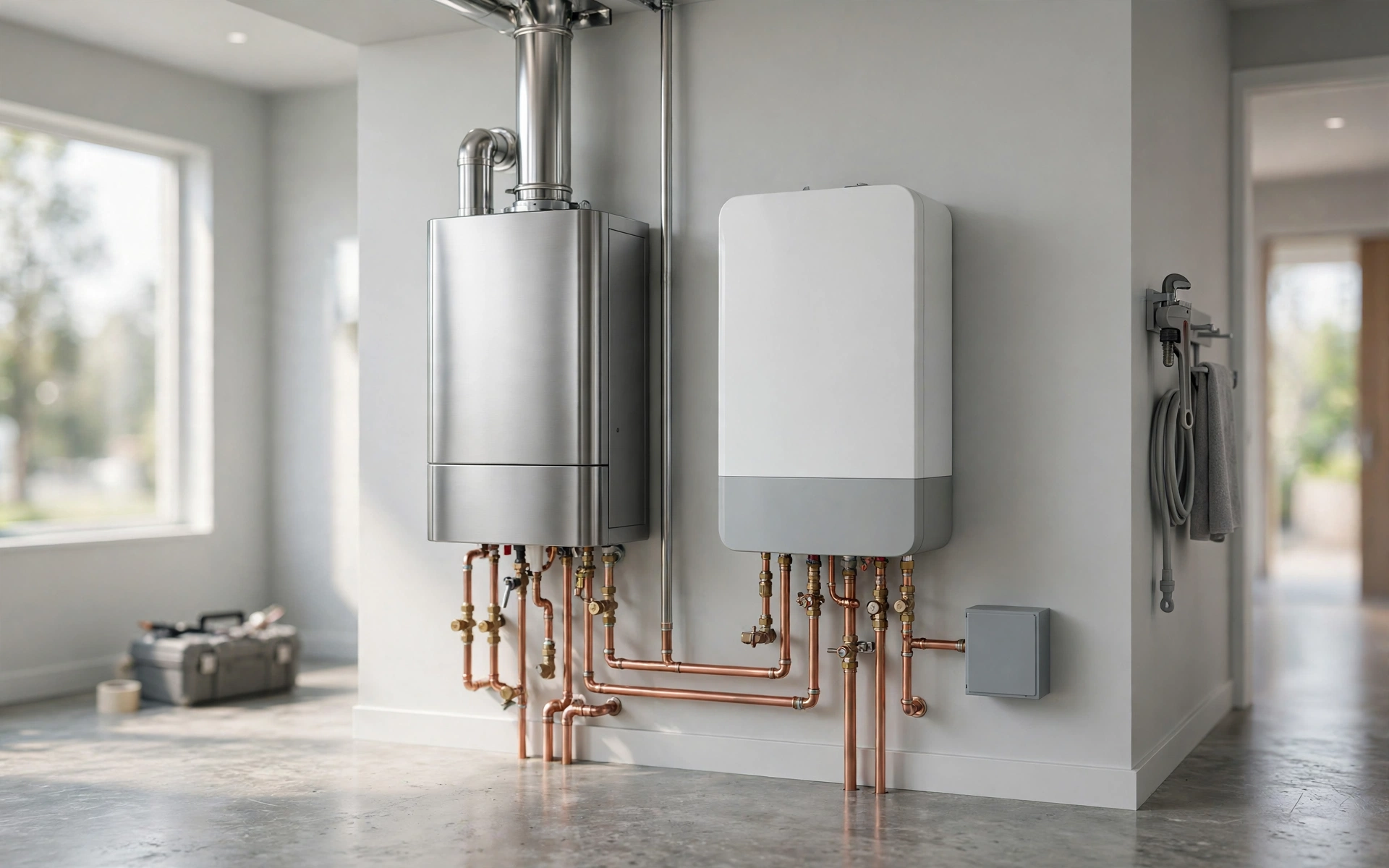
Rinnai vs. Stiebel Eltron: Premium Tankless Water Heater Showdown
Rinnai vs. Stiebel Eltron: Premium Tankless Water Heater Showdown Rinnai gas and Stiebel Eltron electric tankless water heaters serve distinct homeowner need...
Review
Rinnai vs. Stiebel Eltron: Premium Tankless Water Heater Showdown
Rinnai vs. Stiebel Eltron: Premium Tankless Water Heater Showdown Rinnai gas and Stiebel Eltron electric tankless water heaters serve distinct homeowner need...
Fast answer
This article compares Rinnai gas and Stiebel Eltron electric tankless water heaters for whole house applications, focusing on performance, water hardness considerations, installation, and maintenance to help homeowners make an informed choice.
- A step-by-step decision framework that starts with water hardness testing—the most commonly overlooked prerequisite—and integrates pre-treatment selection directly into the heater sizing and brand selection process. This provides a holistic, actionable guide absent from all current competitor content.
- Rinnai is considered a premium, contractor-grade tankless water heater option. Source: https://plumbingsniper.com/rinnai-vs-rheem-tankless-water-heater-2026/
- Rinnai units are recommended for large households (4+ people, 3+ bathrooms) and cold climates, capable of 11.1 GPM flow rates. Source: https://plumbingsniper.com/rinnai-vs-rheem-tankless-water-heater-2026/
- Rinnai's RUR V-series includes built-in recirculation pumps for instant hot water. Source: https://plumbingsniper.com/rinnai-vs-rheem-tankless-water-heater-2026/
- Propane operating costs are approximately double natural gas costs at current rates. Source: https://plumbingsniper.com/rinnai-vs-rheem-tankless-water-heater-2026/
Our top picks
Rinnai vs. Stiebel Eltron: Premium Tankless Water Heater Showdown
Rinnai gas and Stiebel Eltron electric tankless water heaters serve distinct homeowner needs. Rinnai excels in high-demand, cold climates with natural gas availability, delivering high BTU output and flow rates. Stiebel Eltron offers precise temperature control, high energy efficiency, and simpler electric installation. Testing water hardness first is essential to protect either system from scale damage.
What's the core difference between Rinnai (gas) and Stiebel Eltron (electric) tankless water heaters?
Rinnai units use gas combustion (natural gas or propane) to produce high BTU output, ideal for large homes with multiple bathrooms and cold climates. For example, the Rinnai RU199iN delivers up to 199,000 BTU input and supports flow rates around 11.1 gallons per minute (GPM) at a 70°F temperature rise.
Stiebel Eltron electric models, such as the Tempra 36 Plus, use electric resistance heating with advanced flow modulation for precise temperature control and high Uniform Energy Factor (UEF). These units typically provide up to 36 kW output and flow rates around 5.3 GPM at a 70°F rise.
| Feature | Rinnai (Gas) | Stiebel Eltron (Electric) |
| Fuel Source | Natural Gas or Propane | Electricity |
| Max Output | Up to 199,000 BTU (RU199iN) | Up to 36 kW (Tempra 36 Plus) |
| Max Flow Rate @ 70°F | ~11.1 GPM | ~5.3 GPM |
| Typical Best For | Large homes, cold climates | Moderate homes, precise control |
| Primary Limitation | Requires venting and gas lines | Requires heavy electrical service |
Both systems require effective water quality management to prevent scale buildup, which can impair performance and void warranties.
"Choosing between gas and electric tankless heaters depends on your home's fuel availability and hot water demand."
How do I calculate the right size (GPM/BTU/kW) for my home and climate?
Proper sizing starts with calculating your peak simultaneous flow demand in gallons per minute (GPM). Add the flow rates of fixtures used at the same time: showers (~2.5 GPM), faucets (~1.0 GPM), dishwashers (~1.5 GPM). For example, a 3-bath home might peak at 8-9 GPM.
Next, determine your local groundwater temperature (e.g., 40°F in the Midwest) and calculate the temperature rise needed to reach your desired hot water temperature (typically 110°F). For a 40°F inlet, this is a 70°F rise.
Select a heater with sufficient BTU (gas) or kW (electric) output to meet this demand. Undersizing leads to inconsistent hot water and frustration.
| Home Size & Climate | Peak GPM Demand | Temp. Rise (°F) | Required Output |
| 3-bath home, Midwest (40°F) | ~9 GPM | 70°F | ~180,000 BTU or 30 kW |
| 2-bath home, mild climate | ~5 GPM | 50°F | ~90,000 BTU or 18 kW |
The Rinnai RU199iN (199,000 BTU) covers large homes with up to 11 GPM flow. The Stiebel Eltron Tempra 36 Plus (36 kW) suits moderate-demand electric setups. Smaller options include Rheem RTEX-18 (18 kW electric) and Westinghouse WGR050NG (50,000 BTU gas) for point-of-use or smaller homes.
"Accurate sizing based on peak demand and temperature rise prevents costly undersizing mistakes."
Is my water too hard for a tankless heater? (The Mandatory First Step)
Testing water hardness by measuring calcium and magnesium levels is critical. Hardness above 7 grains per gallon (gpg) requires pre-treatment to prevent scale damage to any tankless water heater.
Total Dissolved Solids (TDS) is not a reliable indicator of hardness. Hard water forms scale on heating elements, reducing efficiency and voiding warranties. Always test hardness before purchasing.
| Water Hardness Level | Grains per Gallon (gpg) | Action Needed |
| Soft | 0-3 | No treatment needed |
| Moderate | 3-7 | Monitor, consider treatment |
| Hard | 7-11 | Install water softener or conditioner |
| Very Hard | 11+ | Mandatory water softener |
Treatment options include:
- Fleck 5600SXT: salt-based water softener providing robust scale prevention.
- Aquasana Rhino: salt-free conditioner with filtration, eco-friendly and chemical-free.
- iSpring WGB32B: filtration-only system for sediment and chlorine removal.
Both Rinnai and Stiebel Eltron units require scale prevention to maintain efficiency and warranty coverage.
"Ignoring water hardness testing risks costly damage and shortened heater lifespan."
Rinnai vs. Stiebel Eltron: Installation, Cost, and Efficiency Deep Dive
Rinnai gas units require professional installation involving venting and gas line upgrades, increasing upfront costs. Stiebel Eltron electric units need heavy-gauge electrical circuits but no venting, simplifying installation but possibly requiring electrical panel upgrades.
| Aspect | Rinnai (Gas) | Stiebel Eltron (Electric) |
| Installation Type | Licensed plumber, venting needed | Licensed electrician, no venting |
| Typical Installation Cost | $2,000 - $4,000 | $1,000 - $3,000 (panel upgrade possible) |
| Energy Efficiency (UEF) | ~0.82 - 0.96 | Often >0.95 |
| Fuel Cost Consideration | Natural gas cheaper; propane ~2x cost | Electricity rates vary regionally |
| DIY Installation | Not recommended, voids warranty | Possible with electrician, but professional advised |
Rinnai's gas models offer high output but require permits and professional installation. Stiebel Eltron's electric models provide superior energy efficiency and simpler vent-free installation but may have higher operating costs depending on electricity prices.
"Professional installation is mandatory for gas units to ensure safety and warranty compliance."
How do Rinnai and Stiebel Eltron premium models compare for whole-house use?
For large, gas-ready homes, the Rinnai RU199iN delivers 199,000 BTU and up to 11.1 GPM at a 70°F rise, featuring optional built-in recirculation pumps for instant hot water.
Stiebel Eltron Tempra 36 Plus offers 36 kW output with advanced flow control for precise temperature and up to 5.3 GPM.
| Model | Type | Max Output | Max Flow @ 70°F Rise | Key Features | Best For Home Profile |
| Rinnai RU199iN | Gas | 199,000 BTU | ~11.1 GPM | Built-in recirc pump option, condensing | Large homes, cold climates |
| Stiebel Eltron Tempra 36 Plus | Electric | 36 kW | ~5.3 GPM | Advanced flow control, modulating | Moderate homes, precise control |
| Rheem RTEX-18 | Electric | 18 kW | ~3.4 GPM | Self-modulating, compact | Small homes, point-of-use |
| Westinghouse WGR050NG | Gas | 50,000 BTU | ~3.0 GPM | Compact gas unit | Small homes, limited demand |
This comparison highlights Rinnai's strength in high-demand, cold climate gas homes and Stiebel Eltron's advantage in precision and efficiency for electric setups.
Long-Term Ownership: Maintenance, Reliability, and Warranties
Annual descaling is essential in hard water areas, even with water softeners, to prevent scale buildup that reduces efficiency and damages components.
Maintenance includes:
- Annual descaling
- Cleaning inlet filters
- Monitoring error codes
Warranty coverage requires proper installation by licensed professionals (especially for gas units) and proof of regular maintenance. Rinnai benefits from a broad US service network, while Stiebel Eltron offers premium support but may have fewer local contractors.
Neglecting maintenance, especially descaling, is the leading cause of premature tankless water heater failure.
"Consistent maintenance preserves efficiency, extends lifespan, and protects your warranty."
The Premium Tankless Water Heater Decision Framework
Follow these steps to select the right tankless water heater:
- Test your water hardness by measuring calcium and magnesium levels.
- Calculate your peak simultaneous GPM demand based on household fixtures.
- Determine your fuel availability and local energy costs.
- Evaluate installation constraints: venting, gas lines, electrical panel capacity.
- Select the brand and model that matches your home's size, climate, and water quality.
- Plan and install necessary pre-treatment systems (water softener or conditioner) before the heater.
This framework ensures a holistic approach, protecting your investment and optimizing performance.
"Start with water testing; it’s the foundation for a reliable, efficient tankless water heater system."
Recommended Resources
Do you always need a water softener with a tankless water heater?
What level of water hardness (gpg or ppm) necessitates a water softener for a tankless system?
Is a salt-free water conditioner an effective alternative to a traditional water softener for tankless heaters?
Can regular descaling eliminate the need for a water softener in hard water areas?
Do tankless water heaters qualify for federal tax credits or other energy efficiency rebates?
Is it possible to install a gas tankless water heater as a DIY project?
Recommended Resources

Lead researcher and home comfort specialist at House By Saay. Specializes in ergonomic design, sleep technology, and consumer product durability analysis.
Sources
- https://plumbingsniper.com/rinnai-vs-rheem-tankless-water-heater-2026/
- https://mizudo.com/blogs/news/do-you-still-need-a-mandatory-water-softener-for-a-tankless-water-heater-in-2026
- https://brainstamped.com/home-comfort/guides/best-rinnai-vs-rheem-tankless-water-heater-2026/
- https://plumbingsniper.com/rinnai-vs-rheem-tankless-water-heater-2026/
- https://mizudo.com/blogs/news/do-you-still-need-a-mandatory-water-softener-for-a-tankless-water-heater-in-2026
- https://brainstamped.com/home-comfort/guides/best-rinnai-vs-rheem-tankless-water-heater-2026/
Comments
Join the conversation
Leave a simple comment about Rinnai vs. Stiebel Eltron: Premium Tankless Water Heater Showdown.
No comments yet. Be the first to comment.