As an Amazon Associate I earn from qualifying purchases.
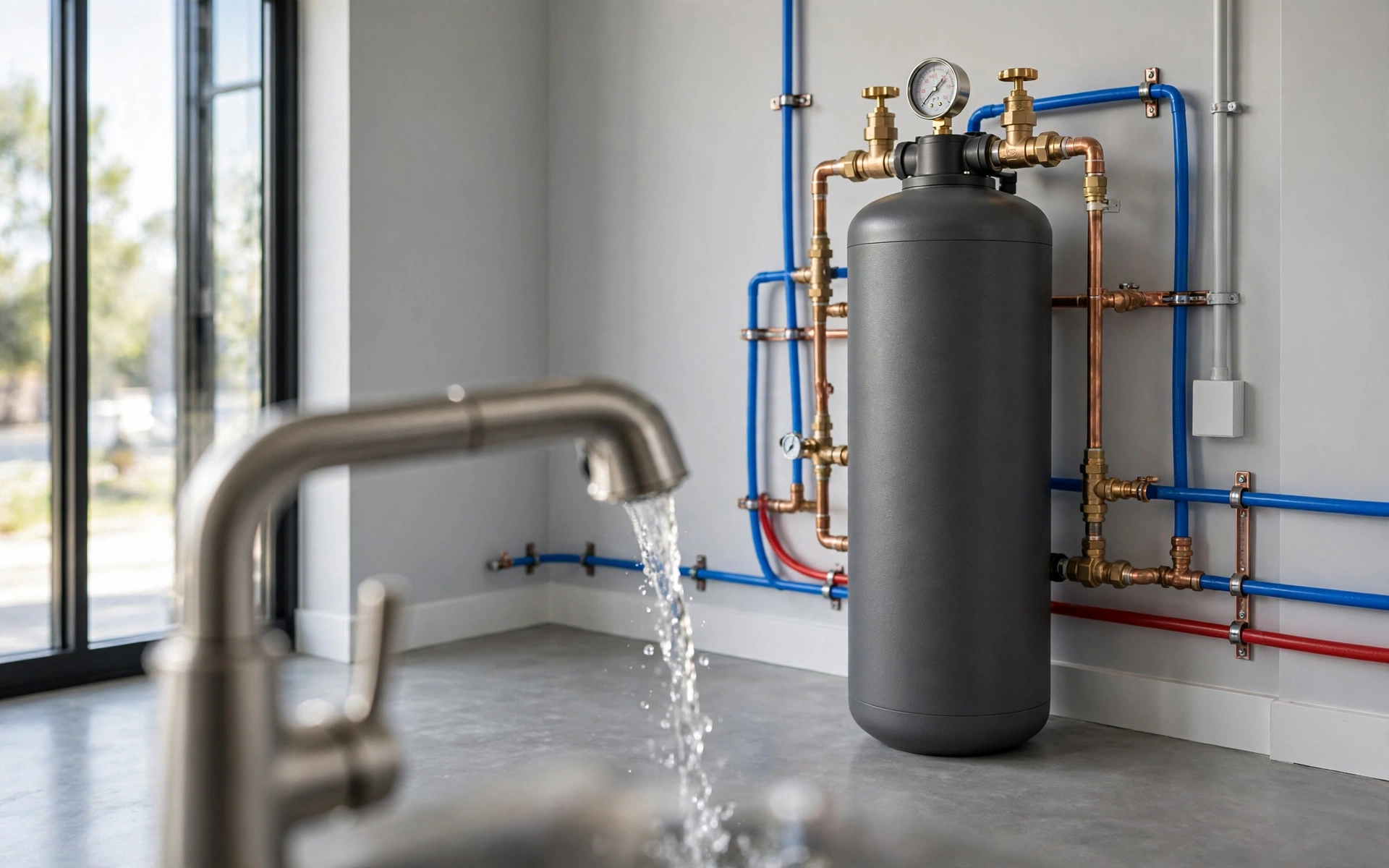
Pelican vs Aquasana: Best Whole House Filter for Hard Water
Pelican vs Aquasana: Best Whole House Filter for Hard Water Hard water destroys plumbing fixtures, shortens appliance lifespans, and leaves stubborn scale de...
Review
Pelican vs Aquasana: Best Whole House Filter for Hard Water
Pelican vs Aquasana: Best Whole House Filter for Hard Water Hard water destroys plumbing fixtures, shortens appliance lifespans, and leaves stubborn scale de...
Fast answer
Pelican vs Aquasana: Best Whole House Filter for Hard Water Hard water destroys plumbing fixtures, shortens appliance lifespans, and leaves stubborn scale de...
Our top picks
Pelican vs Aquasana: Best Whole House Filter for Hard Water
Hard water destroys plumbing fixtures, shortens appliance lifespans, and leaves stubborn scale deposits on everything from showerheads to coffee makers. Homeowners investing $800+ in whole house filtration need to know exactly what they are getting—and more importantly, what they are not getting.
The Verdict: Which System Wins for Hard Water?
Pelican PSE1800 wins for hard water scale prevention through its descaling technology, while Aquasana Rhino wins for comprehensive contaminant removal including heavy metals and industrial solvents. Neither system actually softens water by removing calcium and magnesium minerals.
The confusion starts with marketing language. Both brands position their systems as solutions for hard water problems, but they tackle the issue from completely different angles. Pelican uses a salt-free descaler that alters the crystalline structure of minerals to prevent them from adhering to pipes and fixtures. Aquasana focuses on filtering out contaminants while allowing minerals to pass through.
If your primary concern is scale buildup on fixtures and inside water heaters, Pelican's descaling approach directly addresses that problem. If you are worried about chemical contaminants and heavy metals in your water supply, Aquasana provides superior filtration performance.
Understanding the Core Conflict: Filtration vs. Descaling
Filtration physically removes contaminants from water using activated carbon and other media, while descaling changes how minerals behave without removing them from the water supply. This fundamental difference determines which system works better for your specific water quality issues.
Think of filtration like a sieve that catches unwanted particles, while descaling is more like treating the water so minerals do not stick to surfaces. The Aquasana Rhino uses a multi-stage filtration process with activated carbon that reduces chlorine, heavy metals, organic chemicals, and industrial solvents. The system handles approximately 100,000 gallons per year, making it suitable for average households.
The Pelican PSE1800 takes a three-pronged approach: a sediment pre-filter catches large particles, the main filtration tank removes chlorine and other contaminants, and the descaler unit prevents scale formation. This combination means you get both filtration benefits and scale prevention in one system.
Descaling does not make water feel soft or soapy like traditional salt-based softeners. Water treated by the Pelican system still contains calcium and magnesium, but these minerals will not form hard scale deposits on your fixtures or inside your pipes. Pelican Water has published water testing results showing the PSE1800 reduces chlorine, sediments, other contaminants, and scale.
Head-to-Head: Performance and Technology
The Aquasana Rhino delivers professional-grade contaminant reduction with its 1-million-gallon capacity and proven filtration media, while the Pelican PSE1800 combines filtration with innovative descaling technology and wireless maintenance monitoring. Both systems maintain strong flow rates suitable for large households.
| Feature | Aquasana Rhino | Pelican PSE1800 |
| Primary Function | Contaminant filtration | Filtration + Descaling |
| Contaminant Reduction | Heavy metals, organic chemicals, industrial solvents, chlorine | Chlorine, sediments, scale prevention |
| Scale Management | Minimal (minerals pass through) | Active descaling technology |
| Capacity | 1 million gallons | High-capacity design |
| Warranty | Limited warranty | Lifetime warranty |
| Smart Features | None | Wireless maintenance guides via smartphone |
| System Design | Single tank with pre-filter | Three-stage system (pre-filter, main tank, descaler) |
Aquasana's strength lies in its contaminant removal capabilities. The system is designed to reduce levels of harmful contaminants such as heavy metals, organic chemicals, and industrial solvents, with performance validated through independent testing standards. The system maintains water pressure effectively, with users reporting no noticeable flow reduction even during peak usage.
Pelican's triple-unit design provides comprehensive treatment. The pre-filter catches sediment that could clog the main system, the carbon tank removes chlorine and improves taste, and the descaler prevents mineral buildup. The wireless feature lets you access maintenance guides and troubleshooting through your smartphone—a unique advantage for DIY homeowners. Pelican Water has published water testing results demonstrating the PSE1800 reduces chlorine, sediments, and scale formation.
Pelican's descaling technology lacks the same volume of independent third-party lab verification that Aquasana's contaminant reduction claims carry. Homeowners with severe chemical contamination concerns should weigh this gap carefully.
Cost of Ownership: The 10-Year Breakdown
Pelican PSE1800 delivers lower total cost of ownership over 10 years due to its lifetime warranty coverage and competitive initial pricing, while Aquasana Rhino requires higher ongoing filter replacement costs despite its longer initial filter lifespan. Both systems represent premium investments in the $800+ range.
| Cost Factor | Aquasana Rhino | Pelican PSE1800 |
| Initial Purchase | $1,200–$1,500 | $800–$1,100 |
| Filter Replacements (Year 1–5) | $300–$450 | $150–$250 |
| Filter Replacements (Year 6–10) | $600–$900 | $300–$450 |
| Warranty Coverage | Limited term (5–10 years) | Lifetime warranty |
| 10-Year Total Cost | $2,100–$2,850 | $1,250–$1,800 |
The lifetime warranty becomes crucial when calculating long-term value. If your Pelican system develops a problem in year seven, you are covered. With Aquasana's limited warranty, you are paying out of pocket for repairs or replacements after the warranty period expires.
Filter replacement frequency also impacts your budget. Aquasana's main tank lasts longer between changes, but when replacement time comes, the cost is significant. Pelican's system requires more frequent pre-filter changes, but these are inexpensive and easy to swap.
Pelican's lower initial price combined with lifetime warranty coverage creates a compelling value proposition for budget-conscious homeowners who refuse to compromise on quality. Check current pricing on manufacturer websites and authorized retailers to see today's exact costs.
Installation, Maintenance, and User Experience
Both the Pelican PSE1800 and Aquasana Rhino are designed for DIY installation by homeowners with basic plumbing skills, though professional installation is recommended if you are uncomfortable working with your main water line. Pelican's wireless maintenance features provide additional support for homeowners who prefer guided troubleshooting over calling a plumber.
Installation Requirements
Both systems require a main water line shutoff, adequate space for the unit footprint, and basic PVC or copper pipe cutting tools. The Aquasana Rhino occupies roughly 46 inches of vertical space and 9 inches of width, while the Pelican PSE1800's three-stage design requires approximately 54 inches of vertical space and 30 inches of horizontal clearance. Measure your installation area before ordering.
DIY installation typically takes 2 to 4 hours for a homeowner with moderate plumbing experience. The process involves cutting into the main cold water line, installing a bypass valve, and connecting the system with included fittings. Professional installation adds $300 to $600 to your total cost but ensures proper pressure testing and leak-free connections.
Maintenance Routines
Aquasana Rhino requires pre-filter replacement every 2 to 3 months and main tank replacement every 5 to 10 years depending on water quality and usage volume. The system includes a digital monitor that tracks gallons processed and alerts you when replacement is due.
Pelican PSE1800 requires pre-filter replacement every 6 to 12 months, main tank replacement every 5 to 6 years, and minimal descaler maintenance. The wireless feature sends maintenance reminders to your smartphone and provides step-by-step replacement guides, reducing the learning curve for first-time system owners.
Local Water Quality Considerations
Your local water conditions determine which system delivers the best results. Municipal water supplies vary dramatically in hardness, chlorine levels, and contaminant profiles across different regions.
Testing Your Water First
Before investing in either system, test your water for hardness (measured in grains per gallon or GPG), chlorine levels, and common contaminants. Home test kits cost $20 to $50 and provide baseline data. For comprehensive analysis, send a sample to a certified lab for $100 to $200.
Regional Hardness Patterns
Homes in the Midwest and Southwest typically experience water hardness between 10 and 20 GPG, while coastal and Pacific Northwest regions often see hardness below 5 GPG. If your water exceeds 12 GPG, neither Pelican nor Aquasana will fully address your hardness problems—you need a salt-based softener. For hardness between 5 and 12 GPG, Pelican's descaler provides effective scale prevention. For hardness below 5 GPG, either system works well for general filtration.
Municipal vs. Well Water
Municipal water is treated with chlorine, making Aquasana's carbon filtration particularly effective for taste and odor improvement. Well water often contains higher sediment levels and may include iron, manganese, or hydrogen sulfide—contaminants that require specialized pre-filtration beyond what either system provides as standard. Well water users should consider additional pre-treatment regardless of which system they choose.
Independent Performance Data and Verification
Aquasana's contaminant reduction claims carry extensive third-party validation. The Rhino system is tested and certified to NSF/ANSI Standards 42 and 53 for chlorine, taste, odor, and specific health-related contaminants including lead, cysts, and volatile organic compounds. Independent testing organizations verify these claims through rigorous protocols.
Pelican's descaling technology relies primarily on manufacturer-conducted testing and customer testimonials. While Pelican Water has published water testing results showing the PSE1800 reduces chlorine, sediments, and scale formation, the company has not pursued the same breadth of NSF certification for its descaling claims. Independent reviews from water treatment professionals acknowledge that salt-free descalers can reduce scale adhesion in moderate hardness conditions, but effectiveness varies with water chemistry and flow rates.
Customer support experiences differ between the two brands. Pelican's lifetime warranty provides comprehensive coverage, and customer service representatives report straightforward warranty claim processes. Aquasana's limited warranty covers defects but requires proof of proper installation and maintenance for claims approval. Both companies maintain responsive customer service teams, but Pelican's warranty structure provides longer-term peace of mind.
Who Should Buy Which? Decision Matrix
Your water quality profile and household priorities determine the right choice. Use this framework to match your situation to the appropriate system.
Choose Aquasana Rhino If:
- Your water contains elevated levels of heavy metals, industrial solvents, or organic chemicals
- You prioritize comprehensive contaminant removal over scale prevention
- Your water hardness is below 7 GPG and scale is not your primary concern
- You want NSF-certified performance with extensive third-party validation
- You prefer a single-tank design with a smaller physical footprint
Choose Pelican PSE1800 If:
- Scale buildup on fixtures, showerheads, and water heaters is your main frustration
- Your water hardness falls between 5 and 12 GPG
- You want the lowest total cost of ownership over 10 years
- You value lifetime warranty protection against equipment failure
- You prefer smart features like wireless maintenance monitoring
- You have a large household with high simultaneous water demand
Choose a Salt-Based Softener If:
- Your water hardness exceeds 12 GPG
- You want water that feels soft and soapy
- You need to remove calcium and magnesium minerals entirely
- You have severe scale problems that descaling technology cannot address
Neither Pelican nor Aquasana replaces a true water softener for severe hardness conditions. Understanding this distinction prevents costly mistakes and ensures you invest in the right solution for your home.
Recommended Resources
Do Pelican and Aquasana whole house filters remove hard water minerals?
What are the key differences in filtration technology between the two?
How much do these systems cost, including installation and maintenance?
How long do the filters last and what is the replacement frequency?
Do these systems actually soften water or just reduce scale?
Which system is more suitable for large households with high water usage?
Are these systems certified by NSF or other standards?
Can I install these systems myself or do I need a professional?
Recommended Resources
About the author
House By Saay
Editorial contributor for House By Saay, focused on clear, practical, reader-first buying guidance.
Sources
Keep reading
Related articles
Stop Hard Water Stains: Best Whole-House Filter and Descaler Systems
Stop Hard Water Stains: Best Whole-House Filter and Descaler Systems You spent $800 on a whole-house filter and the white crust on your showerhead keeps comi...
Essential Accessories for Your New Whole House Filter Setup
Essential Accessories for Your New Whole House Filter Setup A whole house water filter is only as reliable as its support infrastructure, and most buyers dis...
5 Mistakes When Buying a Whole House Water Filter
5 Mistakes When Buying a Whole House Water Filter Buying a whole house water filter looks straightforward until you install it and watch your shower pressure...
Aquasana Rhino vs Express Water RO: Whole-House Filtration Compared
Aquasana Rhino vs Express Water RO: Whole-House Filtration Compared Comparing the Aquasana Rhino to an Express Water reverse osmosis system is like comparing...
Comments
Join the conversation
Leave a simple comment about Pelican vs Aquasana: Best Whole House Filter for Hard Water.
No comments yet. Be the first to comment.