As an Amazon Associate I earn from qualifying purchases.
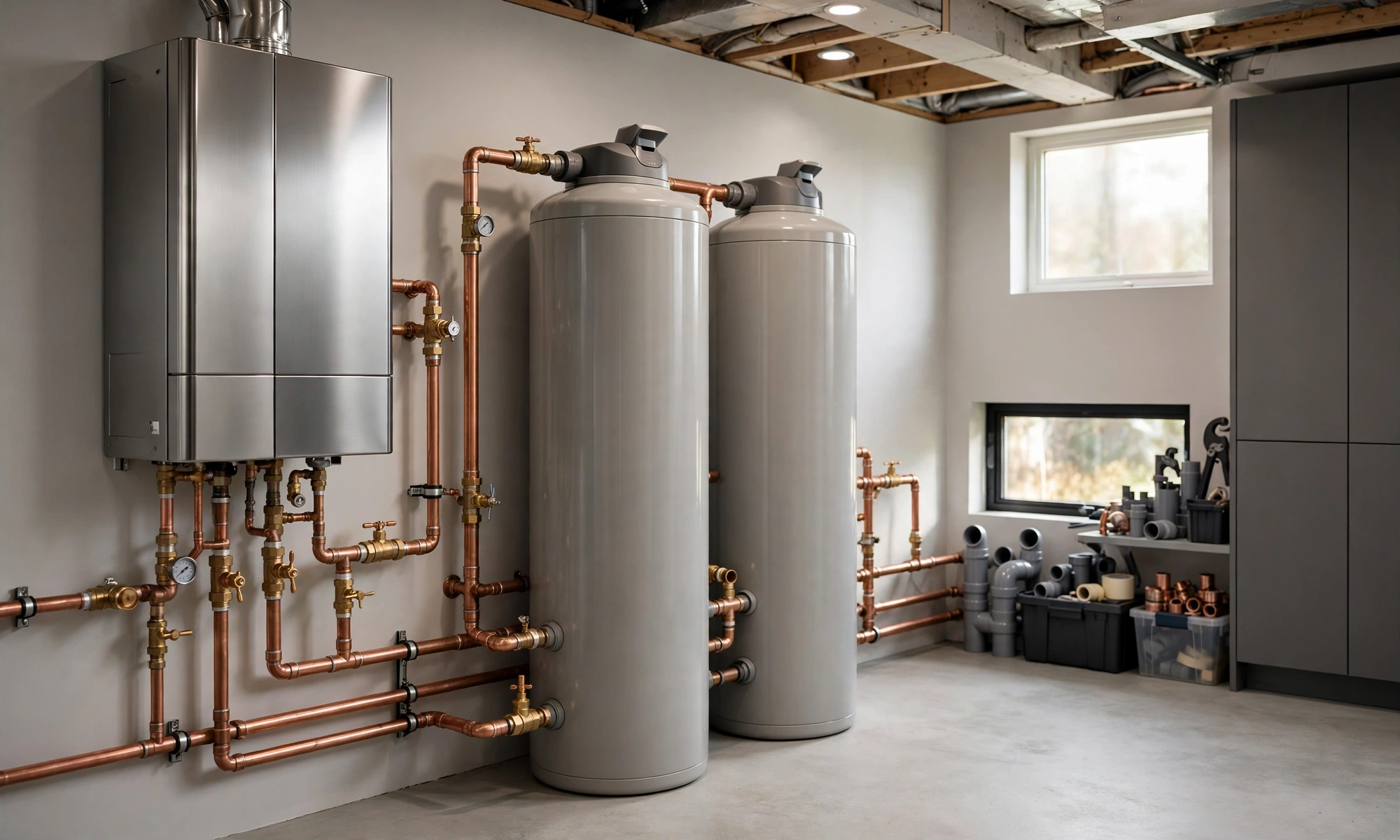
Is a Salt-Free Water Conditioner Worth It for Tankless Heaters?
Is a Salt-Free Water Conditioner Worth It for Tankless Heaters? A salt-free water conditioner is worth considering for tankless heaters when your water hardn...
Review
Is a Salt-Free Water Conditioner Worth It for Tankless Heaters?
Is a Salt-Free Water Conditioner Worth It for Tankless Heaters? A salt-free water conditioner is worth considering for tankless heaters when your water hardn...
Fast answer
A salt free water conditioner benefits tankless water heaters only if your water hardness is moderate and your heater's manual permits it. Accurate water hardness testing and consulting your tankless heater's warranty guidelines are essential before choosing between salt free conditioners, traditional softeners, or des
- The proprietary 'Tankless Heater Water Treatment Decision Framework' is the core unique value. It transforms abstract advice into a personalized, step-by-step diagnostic tool. No competitor synthesizes the water test, the specific manual language, and the homeowner's priorities into a single, actionable flowchart. This directly addresses the major content gap of generic advice versus manufacturer-specific requirements.
- Hardness comes primarily from dissolved calcium and magnesium, which form deposits on heated surfaces and inside water pathways when water is heated. Source: https://mizudo.com/blogs/news/do-you-still-need-a-mandatory-water-softener-for-a-tankless-water-heater-in-2026
- One grain per gallon (gpg) equals about 17.1 mg/L (or ppm) as calcium carbonate. Source: https://mizudo.com/blogs/news/do-you-still-need-a-mandatory-water-softener-for-a-tankless-water-heater-in-2026
- Tankless heaters heat water on demand, making regular maintenance crucial, especially in areas with high water hardness. Source: https://mizudo.com/blogs/news/do-you-still-need-a-mandatory-water-softener-for-a-tankless-water-heater-in-2026
- You do not automatically need a water softener just because you own a tankless water heater; it depends on water hardness, manufacturer recommendations, and desired whole-home reduction. Source: https://mizudo.com/blogs/news/do-you-still-need-a-mandatory-water-softener-for-a-tankless-water-heater-in-2026
Our top picks
Is a Salt-Free Water Conditioner Worth It for Tankless Heaters?
A salt-free water conditioner is worth considering for tankless heaters when your water hardness ranges from 3 to 7 grains per gallon (gpg), you prefer low-maintenance and eco-friendly scale prevention, and your heater's manual does not mandate a traditional softener. For water hardness above 7 gpg or strict warranty compliance, a traditional salt-based softener is usually necessary.
How does water hardness specifically affect the lifespan and efficiency of tankless water heaters?
Water hardness shortens tankless heater lifespan and reduces efficiency by causing mineral scale buildup inside heat exchangers and water pathways. Hard water contains dissolved calcium and magnesium, which precipitate as scale when heated. This scale clogs narrow passages and insulates heat exchanger surfaces, forcing the heater to work harder. The result is reduced flow rates (GPM) and lower energy efficiency (UEF). Over time, scale buildup can cause premature failure and void warranties if water quality limits are exceeded. Regular maintenance and appropriate water treatment are critical in hard water areas.
What are the key differences in how salt-free conditioners and traditional salt-based softeners protect tankless heaters?
Salt-based softeners remove hardness minerals via ion exchange, replacing calcium and magnesium ions with sodium ions, effectively softening water and preventing scale formation. They reduce hardness to near zero but require salt refills and produce wastewater.
Salt-free conditioners, often using Template Assisted Crystallization (TAC), alter the crystallization process of hardness minerals, converting them into microscopic crystals that remain suspended and do not adhere to surfaces. They do not remove hardness minerals or reduce total dissolved solids (TDS) and do not add sodium. Their effectiveness depends on water hardness levels and manufacturer acceptance.
| Feature | Salt-Free Conditioner (TAC) | Salt-Based Softener |
| Removes hardness minerals | No, alters crystallization | Yes, ion exchange removes minerals |
| Adds sodium to water | No | Yes |
| Maintenance required | Low (periodic cartridge replacement) | Moderate (salt refills, regeneration) |
| Wastewater produced | None | Yes |
| Effectiveness on scale | Good for moderate hardness (3-7 gpg) | Excellent for all hardness levels |
| Impact on TDS | No reduction | Reduces TDS |
When is a salt-free water conditioner a better choice than a traditional softener for a tankless heater, and vice-versa?
Choose a salt-free conditioner if your water hardness is moderate (3-7 gpg), you want minimal maintenance, no added sodium, and your tankless heater manual permits it. Salt-free conditioners suit homeowners seeking eco-friendly, low-maintenance scale prevention without altering water chemistry drastically.
Opt for a traditional salt-based softener if your water hardness exceeds 7 gpg, your heater manual requires softened water for warranty compliance, or you want maximum scale prevention. Softening is essential in very hard water areas to avoid efficiency loss and damage.
| Scenario | Recommended Treatment |
| Water hardness < 3 gpg | No treatment or periodic descaling |
| Water hardness 3-7 gpg | Salt-free conditioner if allowed |
| Water hardness > 7 gpg | Traditional salt-based softener |
| Warranty requires softening | Traditional salt-based softener |
What specific water hardness levels (gpg/ppm) necessitate a water conditioner or softener for tankless heaters?
Water hardness below 3 grains per gallon (gpg) generally does not require treatment beyond routine descaling. Between 3 and 7 gpg, a salt-free conditioner can be effective if your tankless heater manual permits it. Above 7 gpg, a traditional salt-based softener is recommended to prevent scale buildup and maintain warranty coverage.
One grain per gallon equals approximately 17.1 mg/L (ppm) as calcium carbonate. Accurate water hardness testing is critical to making the right choice.
How do I properly test my water hardness, and what steps should I take based on the results?
Use a professional water test or reliable test strips certified for hardness measurement in grains per gallon (gpg) or ppm.
- Obtain a water hardness test kit or hire a certified laboratory for testing.
- Measure your water hardness and record the value.
- Locate your tankless water heater's installation manual and find the maximum allowable hardness.
- Compare your water hardness to the manual's limit.
- Choose treatment accordingly: no treatment if below 3 gpg, salt-free conditioner if 3-7 gpg and allowed, or salt-based softener if above 7 gpg or required by warranty.
Certified water testing ensures accuracy and reliability, which is essential for warranty compliance and optimal treatment selection.
What are the maintenance requirements for tankless heaters when using (or not using) a salt-free conditioner?
Using a salt-free conditioner reduces scale buildup, lowering descaling frequency to once every 1-2 years depending on hardness. Without treatment, descaling may be required annually or more often in hard water areas. Traditional softeners can extend descaling intervals further but require salt replenishment and system regeneration.
Regular maintenance includes flushing the heat exchanger with a descaling solution, inspecting filters, and checking for flow restrictions. Always follow your tankless water heater manufacturer's maintenance schedule to preserve efficiency and warranty.
How do salt-free conditioners compare to traditional softeners and descaling in cost and environmental impact?
Salt-free conditioners have lower upfront and ongoing costs compared to traditional softeners, with no salt purchase or wastewater discharge. They are environmentally friendly but less effective in very hard water.
Traditional softeners have higher installation and maintenance costs, use salt regularly, and produce brine waste but provide superior scale prevention.
Descaling alone is the least costly short-term option but requires frequent labor and risks premature heater damage if scale accumulates excessively.
| Treatment Type | Upfront Cost | Maintenance Cost | Environmental Impact | Effectiveness on Scale |
| Salt-Free Conditioner | Low | Low | Eco-friendly, no waste | Good (3-7 gpg) |
| Salt-Based Softener | High | Moderate | Produces brine waste | Excellent (all levels) |
| Descaling Only | Lowest | High (frequent) | None | Limited (reactive) |
Manufacturer Recommendations and Warranty Considerations
Always consult your specific tankless water heater's installation and warranty manual for water quality requirements. Manufacturers like Rinnai and Rheem specify maximum water hardness levels and may require softened water to maintain warranty coverage. Ignoring these guidelines risks voiding your warranty.
For example, Rinnai models often recommend water hardness below 7 gpg and may accept salt-free conditioners if hardness is moderate and maintenance is followed. Rheem's warranty similarly requires adherence to water quality limits and professional installation.
Unpermitted installations or ignoring water treatment recommendations can void warranties. Always hire licensed plumbers and follow manufacturer instructions.
Installation and Maintenance Costs Comparison
Salt-free conditioners typically have lower installation costs and minimal maintenance, requiring only periodic cartridge replacements. Traditional softeners involve higher upfront costs, salt purchases, and regular regeneration cycles, plus wastewater disposal considerations.
Over multiple years, salt-free conditioners save on salt and water waste but may require more frequent descaling if hardness is near the upper limit. Traditional softeners provide superior protection but at higher ongoing costs.
Summary Decision Framework
- Test your water hardness accurately using professional services or certified kits.
- Review your tankless water heater manual for maximum hardness limits and treatment recommendations.
- If hardness is below 3 gpg, no treatment beyond periodic descaling is usually sufficient.
- For 3-7 gpg, consider a salt-free conditioner if your manual permits and you prefer low maintenance.
- For hardness above 7 gpg or if warranty requires, install a traditional salt-based softener.
- Maintain your system according to manufacturer guidelines to preserve efficiency and warranty.
This approach ensures optimal protection, cost-effectiveness, and warranty compliance.
Recommended Resources
Do you need a water softener with a tankless water heater?
What hardness level is considered hard water?
Is a salt-free conditioner the same as a water softener?
Does descaling replace a water softener?
Does a water softener lower total dissolved solids (TDS)?
Which tankless water heater brand has better recirculation?
Recommended Resources

Lead researcher and home comfort specialist at House By Saay. Specializes in ergonomic design, sleep technology, and consumer product durability analysis.
Sources
- https://mizudo.com/blogs/news/do-you-still-need-a-mandatory-water-softener-for-a-tankless-water-heater-in-2026
- https://plumbingsniper.com/rinnai-vs-rheem-tankless-water-heater-2026/
- https://brainstamped.com/home-comfort/guides/best-rinnai-vs-rheem-tankless-water-heater-2026/
- https://mizudo.com/blogs/news/do-you-still-need-a-mandatory-water-softener-for-a-tankless-water-heater-in-2026
- https://plumbingsniper.com/rinnai-vs-rheem-tankless-water-heater-2026/
- https://brainstamped.com/home-comfort/guides/best-rinnai-vs-rheem-tankless-water-heater-2026/
Comments
Join the conversation
Leave a simple comment about Is a Salt-Free Water Conditioner Worth It for Tankless Heaters?.
No comments yet. Be the first to comment.