As an Amazon Associate I earn from qualifying purchases.
How to Install a Whole House Water Filter: Pro Plumbing Guide
How to Install a Whole House Water Filter: Pro Plumbing Guide Installing a whole house water filter involves shutting off the main water supply, cutting the ...
Review
How to Install a Whole House Water Filter: Pro Plumbing Guide
How to Install a Whole House Water Filter: Pro Plumbing Guide Installing a whole house water filter involves shutting off the main water supply, cutting the ...
Fast answer
Installing a whole house water filter improves your home's water quality by removing contaminants before they reach faucets and appliances. This guide covers tools, placement, sizing, installation steps, and maintenance to help US homeowners confidently install or decide when to hire a professional.
- The 'Pro Plumbing Checklist' for pre-installation—a downloadable/printable guide that walks the reader through 1) Performing/Interpreting a Water Test, 2) Identifying Main Pipe Material/Size, 3) Checking Local Code/Permit Requirements, and 4) Selecting the Correct System Type via a Decision Flowchart. This original tool directly addresses the research-identified gaps in diagnosis and planning.
- Water softeners like Aquasana SimplySoft® have 95 GPG capacity, while AquaSure Harmony has 110 GPG capacity. Source: https://softprowatersystems.com/pages/ultimate-comparison-of-water-softeners-guide
- The GE 30,000 Grain water softener costs $499. Source: https://qualitywatertreatment.com/pages/what-are-nsf-certified-best-value-water-softener-systems
- The Whirlpool WHES40E water softener costs $739 and has a 40,000-grain capacity. Source: https://qualitywatertreatment.com/pages/what-are-nsf-certified-best-value-water-softener-systems
- The WaterBoss 700 water softener costs $579. Source: https://qualitywatertreatment.com/pages/what-are-nsf-certified-best-value-water-softener-systems
Our top picks
How to Install a Whole House Water Filter: Pro Plumbing Guide
Installing a whole house water filter involves shutting off the main water supply, cutting the main line after the shutoff valve, installing a bypass valve and pressure gauge, connecting the filter housing, and testing for leaks. Proper sizing based on water testing and using NSF-certified components ensures effective filtration. Complex systems or lack of plumbing experience warrant professional installation.
What Tools and Materials Do You Need for a DIY Installation?
You will need pipe cutters, adjustable wrenches, Teflon tape, a tubing bender (for PEX pipes), a bypass valve kit, a pressure gauge, and the filter housing unit. Confirm your main pipe size (typically 3/4" or 1") and material (copper, CPVC, or PEX) before starting.
Gathering the right tools prevents delays and unsafe workarounds. For copper pipes, soldering equipment or SharkBite fittings simplify connections. Always include a sediment pre-filter housing to extend the life of your main filter, even if your system does not require it. Popular bypass valve kits and pressure gauges are available from brands like Culligan and Aquasana.
Where Is the Best Place to Install a Whole House Water Filter?
Install the filter on the main cold water line after the main shutoff valve and pressure regulator but before any branch lines or the water heater. Choose a protected indoor location such as a basement, garage, or utility room.
This placement ensures all water entering your home is filtered and prevents hot water from damaging filter media. For homes without basements, consider crawlspaces or exterior installations with insulated enclosures. The filter should be accessible for maintenance and protected from freezing.
Typical Installation Location Diagram
| Component | Location |
| Main Shutoff Valve | Entry point of water line |
| Pressure Regulator | Immediately after shutoff valve |
| Bypass Valve & Filter | After regulator, before branches |
| Water Heater | Downstream of filter |
Step-by-Step: How to Install a Basic Whole House Sediment/Carbon Filter
- Shut off the main water supply and open faucets to drain pipes.
- Cut the main water line at the chosen installation point.
- Install a bypass valve assembly to allow water flow during maintenance.
- Attach a pressure gauge to monitor system pressure.
- Connect the filter head to the bypass valve using appropriate fittings.
- Insert the filter cartridge and hand-tighten the housing.
- Open the bypass valve to test for leaks.
- Close the bypass valve and slowly open the main valve to pressurize the system.
Always install a bypass valve to avoid shutting off water during filter changes. Avoid using pipe thread sealant on filter housing threads to prevent damage. Neglecting pre-filters or improper sealing are common mistakes that cause leaks or premature clogging.
| Step | Action | Pro Tip |
| 1 | Shut off water | Open lowest faucet to drain system |
| 3 | Install bypass valve | Choose a kit compatible with pipe material |
| 6 | Insert filter cartridge | Hand-tighten only to avoid cracking |
Recommended system: Culligan WH-S200-C offers reliable sediment and carbon filtration for whole-house use.
Step-by-Step: Installing a Water Softener
Water softeners require different installation steps due to their size and regeneration system.
- Shut off the main water supply and drain the system.
- Locate the main cold water line after the shutoff valve.
- Cut the pipe and install a bypass valve designed for softeners.
- Connect the softener inlet and outlet according to manufacturer instructions.
- Connect the drain line to a suitable drain.
- Program the control valve with hardness settings from your water test.
- Slowly open the main water supply and check for leaks.
Water softeners often require electrical power and a drain connection, so ensure these are available. Professional installation is recommended for units with high grain capacity or complex plumbing.
Step-by-Step: Installing a Whole House Reverse Osmosis System
Whole house RO systems are complex and usually require professional installation. Key steps include:
- Shut off main water supply.
- Install pre-filters (sediment and carbon) on the main line.
- Connect RO membrane housing and post-filters.
- Install storage tanks and booster pumps if needed.
- Connect drain lines and electrical components.
- Program system controls.
- Test for leaks and proper operation.
Due to complexity and cost (often exceeding $10,000 installed), professional installation is strongly advised.
When Should You Hire a Professional Plumber Instead?
Hire a professional if you need a water softener, reverse osmosis system, or complex iron filter; if your plumbing is old or galvanized; if local codes require permits; or if you lack confidence working on main water lines.
Professional installation costs range from $1,200 to $3,800 for ion exchange softeners and can exceed $10,000 for whole-house reverse osmosis systems. Many NSF-certified systems recommend professional installation to maintain warranties.
Pro Installation Decision Checklist
| Condition | Action |
| Water hardness > 8 GPG | Hire a pro |
| Well water with iron or sulfur | Hire a pro |
| Complex plumbing or galvanized pipes | Hire a pro |
| Permit required by local code | Hire a pro |
| No DIY plumbing experience | Hire a pro |
How Do You Size a Whole House Water Filter Correctly?
Sizing depends on your water test results (hardness, iron, sediment levels) and household water demand (number of bathrooms and occupants). Match filter capacity to your specific needs rather than buying the largest unit.
Start with a water test to measure grains per gallon (GPG) hardness and contaminant levels. For example, Aquasana SimplySoft has a 95 GPG capacity, while Aquasure Harmony offers 110 GPG. Use this data to select the right system:
| Water Problem | System Type | Example Product | DIY Difficulty |
| Sediment & Chlorine | Whole House Carbon Filter | Culligan WH-S200-C | Moderate |
| Hard Water (Scale) | Water Softener | Aquasure Harmony Series 48 | High (Pro Recommended) |
| Well Water (Iron) | Specialized Well Water Filter | Aquasana Rhino Well Water System | Moderate to High |
| Hard Water + Iron | Combination Softener/Iron Filter | AFW Filters IRONPRO 2 | High (Pro Recommended) |
Choosing the right filter media based on your water test results prevents overspending and ensures effective treatment.
What Maintenance Is Required After Installation?
Regular maintenance includes changing sediment pre-filters every 3-6 months, replacing main carbon filters every 6-12 months, adding salt to water softeners monthly, and performing annual leak and pressure drop checks.
Neglecting pre-filters is a common mistake that shortens main filter life. Operating costs for softeners average $100 to $300 annually for salt, filter changes, and servicing.
| Maintenance Task | Frequency |
| Sediment pre-filter change | Every 3-6 months |
| Carbon filter replacement | Every 6-12 months |
| Salt addition (softeners) | Monthly |
| Leak and pressure check | Annually |
Troubleshooting Tips
- Low water pressure often indicates a clogged filter; replace cartridges promptly.
- Leaks usually result from loose housing or poor seals; tighten fittings and check O-rings.
Maintaining your system protects your investment and ensures consistent water quality.
Summary
Installing a whole house water filter requires careful planning, the right tools, and proper placement. Follow detailed installation steps for your system type, size your filter based on water test results and household needs, and maintain regularly to ensure optimal performance. For complex systems or if unsure, hire a professional plumber to avoid costly mistakes and ensure compliance with local codes.
Visual Recommendations:
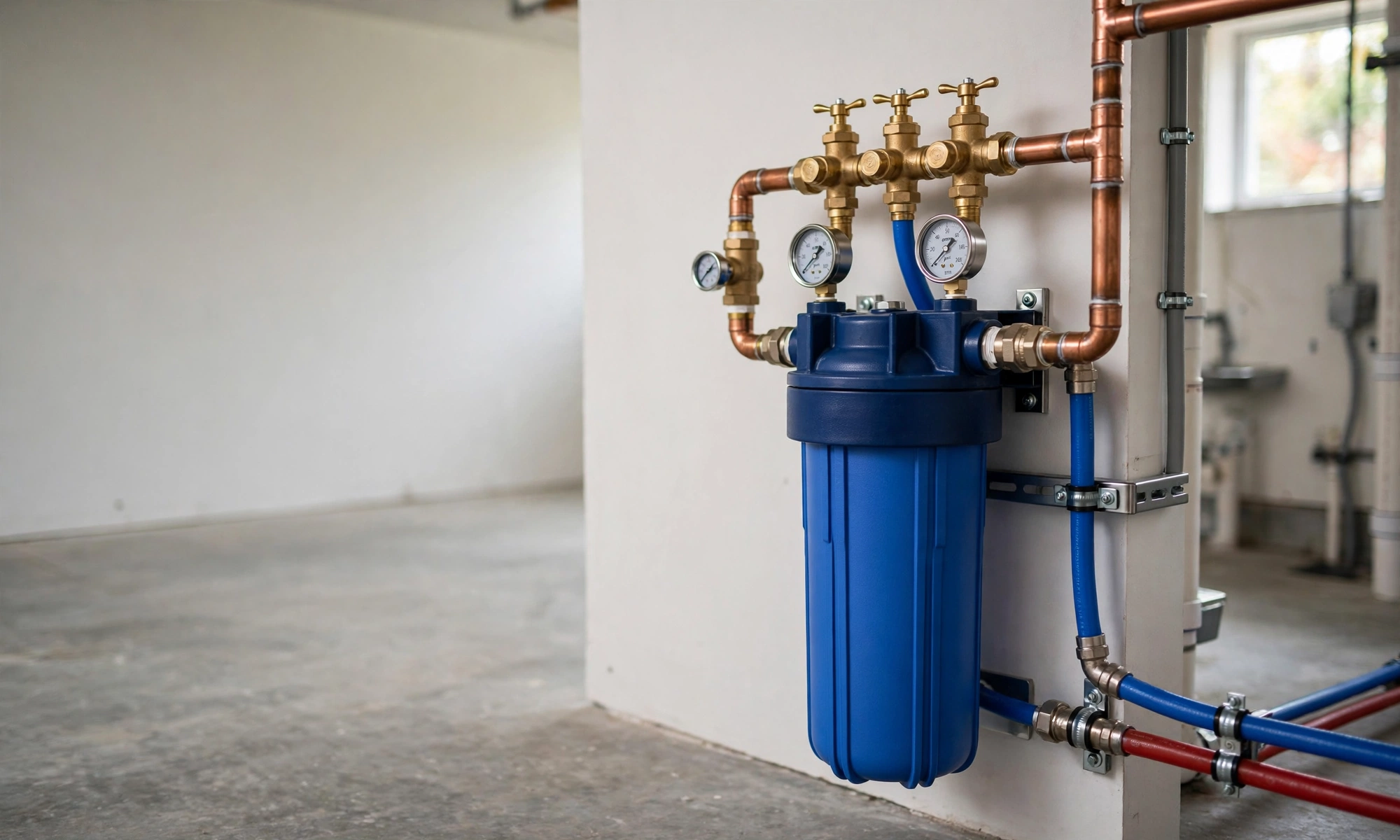
- Diagram: A simple labeled diagram of a home's main water line showing the main shutoff valve, pressure regulator, bypass valve, filter housing, water heater, and branch lines.
- Flowchart: A decision flow chart guiding from water test results (sediment, chlorine, hardness, iron) to recommended system types and example products.
- Illustration: Labeled photo or illustration showing bypass valve, pressure gauge, filter housing, inlet and outlet connections.
These visuals enhance understanding of installation points, system components, and sizing decisions.
Recommended Resources
What is the difference between a 48,000 grain and a 64,000 grain water softener?
Why are water softeners being banned in some areas?
What are the common signs of hard water in a home?
What does NSF certification mean for water treatment systems?
Recommended Resources

Lead researcher and home comfort specialist at House By Saay. Specializes in ergonomic design, sleep technology, and consumer product durability analysis.
Sources
- https://softprowatersystems.com/pages/ultimate-comparison-of-water-softeners-guide
- https://qualitywatertreatment.com/pages/what-are-nsf-certified-best-value-water-softener-systems
- https://www.homebuddy.com/costs/water-treatment-system/cost-to-install-water-softener
- https://hellawater.com/average-water-softener-cost-2026-prices-installation-guide/
Comments
Join the conversation
Leave a simple comment about How to Install a Whole House Water Filter: Pro Plumbing Guide.
No comments yet. Be the first to comment.