As an Amazon Associate I earn from qualifying purchases.
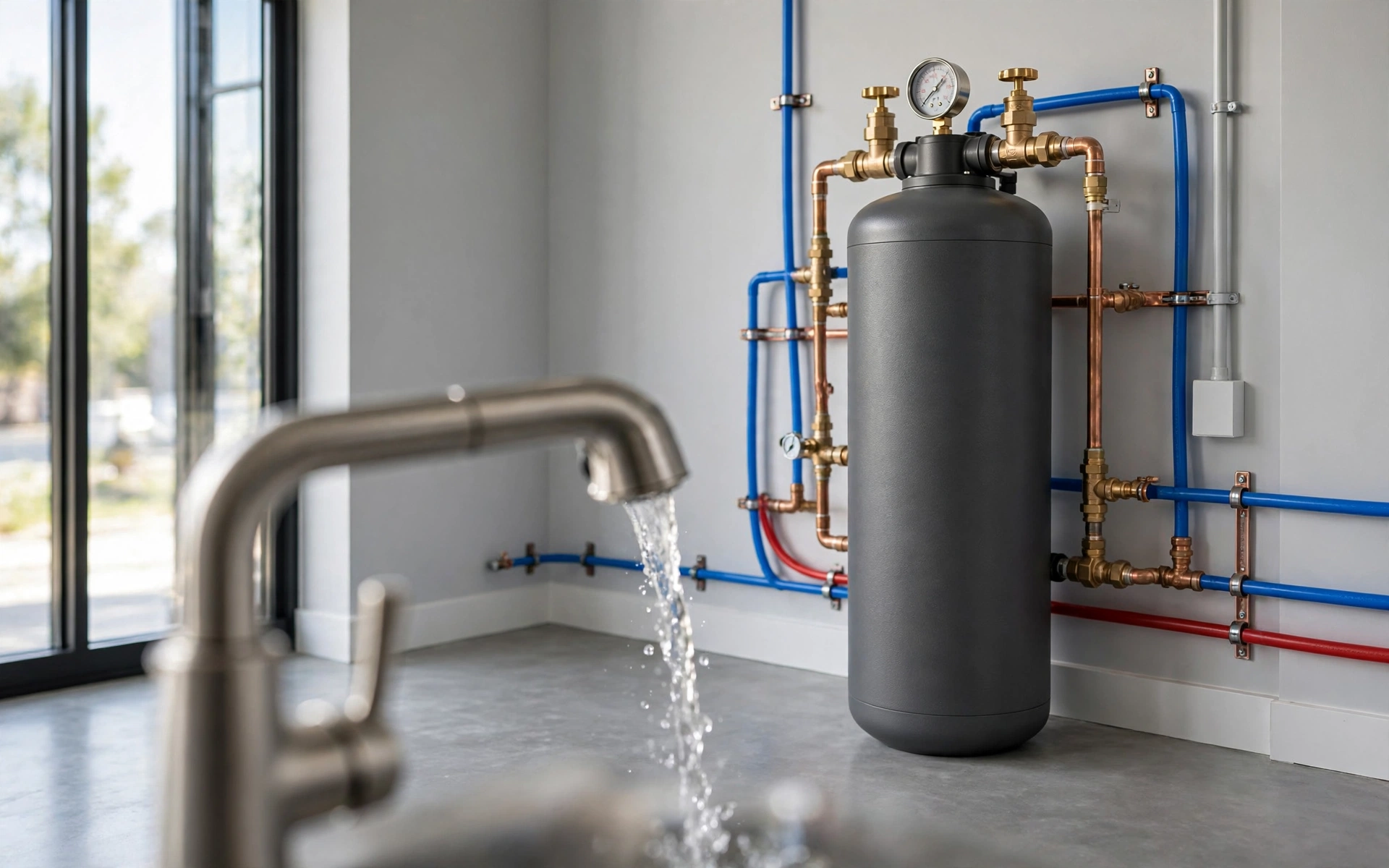
Stop Hard Water Stains: Best Whole-House Filter and Descaler Systems
Stop Hard Water Stains: Best Whole-House Filter and Descaler Systems You spent $800 on a whole-house filter and the white crust on your showerhead keeps comi...
Review
Stop Hard Water Stains: Best Whole-House Filter and Descaler Systems
Stop Hard Water Stains: Best Whole-House Filter and Descaler Systems You spent $800 on a whole-house filter and the white crust on your showerhead keeps comi...
Fast answer
Stop Hard Water Stains: Best Whole House Filter and Descaler Systems You spent $800 on a whole house filter and the white crust on your showerhead keeps comi...
Our top picks
Stop Hard Water Stains: Best Whole-House Filter and Descaler Systems
You spent $800 on a whole-house filter and the white crust on your showerhead keeps coming back. The problem is not the filter quality. Standard whole-house filters remove sediment, chlorine, and some VOCs, but they do not remove dissolved calcium or magnesium. Those minerals are what cause hard water stains, and only a softener or descaler can address them.
Why Whole-House Filters Don't Stop Hard Water Stains
Whole-house filters physically trap particles like sediment, rust, and chlorine byproducts, but dissolved calcium carbonate and magnesium pass right through the carbon and sediment media. HomeWater's analysis of top whole-home water filters explicitly distinguishes between filtration and softening, confirming that filtration alone cannot address hardness minerals responsible for scale and staining. To stop new stains from forming, you need a system that either removes hardness ions or changes how those minerals behave in your water.
Existing stains on glass, tile, and chrome require physical removal with an acidic cleaner like vinegar or a commercial calcium remover. No whole-house system dissolves deposits already bonded to surfaces. Think of your treatment system as prevention, not remediation.
A whole-house filter cleans your water. A softener or descaler stops your water from leaving marks.
How to Remove Existing Hard Water Stains Before Installing a System
Before you install any whole-house treatment, strip the existing scale from your fixtures, glass, and appliances. A prevention system will not dissolve what is already there.
- Showerheads and faucets: Soak removable parts in white vinegar for 30 to 60 minutes. For fixed fixtures, wrap a vinegar-soaked rag around the surface and secure it with a rubber band. Scrub with a soft brush and rinse.
- Glass shower doors: Spray a 50/50 solution of white vinegar and water. Let it sit for 10 minutes, then scrub with a non-scratch pad. For heavy buildup, apply a paste of baking soda and vinegar, let it fizz for five minutes, then wipe clean.
- Toilet bowls: Pour one cup of white vinegar into the bowl, let it sit overnight, then scrub with a toilet brush. For stubborn rings, use a pumice stone designed for porcelain.
- Dishwashers and washing machines: Run an empty cycle with two cups of white vinegar or a commercial descaler product rated for appliances.
- Tile and grout: Apply a commercial calcium-and-lime remover according to label directions. Rinse thoroughly and seal grout lines afterward to resist future staining.
Once surfaces are clean, a whole-house descaler or softener will keep them that way.
Salt-Based Softener vs. Salt-Free Descaler: The Real Difference for Stain Prevention
Salt-based ion exchange softeners physically remove calcium and magnesium ions from your water, replacing them with sodium ions, which eliminates hardness entirely and prevents all scale formation. Salt-free descalers using template-assisted crystallization (TAC) do not remove minerals but alter their crystal structure so they cannot adhere to pipes, fixtures, or glass. For severe staining and laundry issues, a salt-based softener delivers the strongest result. For homeowners who want scale prevention without adding sodium, wasting water, or dealing with a slippery shower feel, a salt-free descaler is the better fit.
| Feature | Salt-Based Softener | Salt-Free Descaler (TAC) |
| Removes hardness minerals | Yes, completely | No, alters crystal structure |
| Prevents new scale stains | Yes | Yes |
| Removes existing scale | No | No |
| Adds sodium to water | Yes | No |
| Requires salt refills | Yes | No |
| Wastes water during regeneration | Yes | No |
| Water feel | Slippery, soft | Normal, mineral-rich |
| Best for | Severe staining, laundry, very hard water (>15 GPG) | Moderate hard water, eco-conscious buyers |
Choose a salt-based softener when your water tests above 15 grains per gallon or when laundry and glassware staining is your primary complaint. Choose a salt-free descaler when your hardness is moderate, you want lower maintenance, and you prefer the natural feel of mineral water.
Top Pick: Pelican PSE1800 (Best Filter+Descaler Combo)
The Pelican Premium Series Whole House Water Filter System (PSE1800) is the best all-in-one system for large households dealing with hard water stains because it combines a sediment pre-filter, a high-capacity main filtration tank, and an integrated salt-free descaler in a single bundle. Pelican's published testing shows the PSE1800 reduces chlorine, sediments, and scale buildup while maintaining the flow rates that large homes demand. The system prevents scale adhesion in plumbing and on fixtures without producing the soapy, slippery feel that salt-based softeners create.
It is important to note that Pelican's scale-reduction testing is brand-sponsored and has not been independently verified by a third-party laboratory. The results are consistent with the general performance of TAC descaling technology, but buyers should treat the specific percentage claims as manufacturer data rather than independent certification.
Pelican markets the PSE1800 as a high-capacity system designed to support consistent pressure across multiple simultaneous fixtures, which is critical when two showers, a dishwasher, and a washing machine run at the same time. Verify the current model specifications and tank configuration at the time of purchase, as packaging and product details may change. Pelican backs the system with a lifetime warranty on parts, though warranty terms are subject to change and should be confirmed directly with the manufacturer before purchase. The integrated descaler means you do not need to source and install a separate conditioning unit.
Pelican competes at a lower price point than many comparable filter-plus-conditioner bundles while delivering strong filtration and scale-reduction results in one package. For large homes that need high flow, long filter intervals, and built-in stain prevention, the PSE1800 is the strongest single-system option.
The PSE1800 bundles filtration and descaling so large homes get stain prevention without sacrificing water pressure.
Runner Up: Aquasana Rhino (Best for Brand Trust and Pairing)
The Aquasana Rhino whole-house filtration system is designed for approximately 100,000 gallons per year of average household usage, though actual capacity depends on your water hardness and daily consumption. The Rhino offers a modular design that lets you pair it with separate water conditioners, UV purification, or additional filtration stages. Aquasana has a longer brand history in the residential water treatment space, which matters to buyers who value proven track records over newer product bundles. However, the Rhino's base configuration is a filter system, not a descaler, so you must add a separate conditioning unit to address hard water stains.
The trade-off is straightforward. Pelican includes descaling technology out of the box at a lower total price. Aquasana gives you more flexibility to customize your setup with UV or dedicated softener add-ons, but you will pay more to assemble an equivalent stain-prevention system. If your priority is a single purchase that handles filtration and scale prevention together, Pelican wins. If you want to build a multi-stage system and value brand longevity, Aquasana is the stronger platform.
The Nuclear Option: When You Need Both Softener and Filter
Pairing a dedicated salt-based water softener with a whole-house carbon filter is the most robust solution for homes with extremely hard water above 15 grains per gallon, visible staining on multiple fixtures, and laundry that feels stiff or looks dingy. This dual-system approach costs more upfront, typically $1,500 or more installed, but it delivers total hardness removal plus chlorine and sediment filtration in one plumbing run.
Recommended configuration:
- Sediment pre-filter (5-micron) to protect downstream equipment.
- Salt-based ion exchange softener to remove calcium and magnesium.
- Whole-house carbon filter for chlorine, taste, and odor.
- Optional UV purification if your water source is a well or has bacterial concerns.
This setup eliminates the minerals that cause stains entirely, protects your water heater and appliances from scale damage, and ensures clean-tasting water at every tap. The downsides are real: you will buy salt regularly, the system requires periodic resin bed maintenance, and it generates wastewater during regeneration cycles. Expect ongoing salt costs of $10 to $20 per month depending on hardness levels and household size.
For budget-conscious buyers, the total cost of ownership over 10 years for a dual softener-plus-filter system typically ranges from $2,500 to $4,000 including equipment, installation, salt, and filter replacements. A salt-free descaler combo like the Pelican PSE1800 costs roughly $1,200 to $1,800 over the same period when you factor in filter replacements but no salt or wastewater costs. The softener path costs more but delivers zero tolerance for staining. The descaler path costs less and handles moderate hardness well, but may not satisfy homes with extreme hardness or severe existing staining.
Buying Guide: Flow Rate, Capacity, and Maintenance for Large Homes
A whole-house system that cannot keep up with your household's peak demand will cause pressure drops, incomplete filtration, and frustrated residents. Large homes with three or more bathrooms need to plan carefully.
Calculating Your Required Flow Rate
Add up the gallons per minute (GPM) of every fixture that might run simultaneously:
| Fixture | Typical GPM |
| Shower | 2.0 to 2.5 |
| Bathroom faucet | 1.0 to 1.5 |
| Kitchen faucet | 1.5 to 2.2 |
| Dishwasher | 1.5 to 2.0 |
| Washing machine | 1.5 to 3.0 |
| Outdoor hose bib | 3.0 to 5.0 |
A household with two showers, a dishwasher, and a washing machine running at the same time needs a minimum of 7 to 10 GPM. Most premium whole-house systems are rated for 7 to 15 GPM. Choose a system rated at least 2 GPM above your calculated peak to maintain pressure and allow the media to work effectively.
Capacity Planning for Large Households
Capacity is measured in total gallons the system can treat before media replacement. A family of six in a 3,500-square-foot home may use 300 to 400 gallons per day, or roughly 110,000 to 150,000 gallons per year. Systems rated for 100,000 gallons per year may need media replacement sooner than advertised in high-use households. Always choose a capacity rating 20 to 30 percent above your estimated annual usage.
Maintenance Intervals and Total Cost of Ownership
| Component | Replacement Interval | Estimated Cost |
| Sediment pre-filter | 3 to 6 months | $15 to $30 |
| Main carbon tank | 12 to 24 months | $100 to $250 |
| TAC descaler media | 3 to 5 years | $150 to $300 |
| Salt (softener only) | Monthly | $10 to $20/month |
| Softener resin bed | 7 to 10 years | $100 to $200 |
Salt-free descaler systems have lower ongoing costs because they eliminate salt purchases and wastewater. Salt-based softeners cost more over time but deliver complete hardness removal. Factor in professional installation if you are not comfortable cutting into your main water line, which typically adds $300 to $800 to the total project cost.
Installation Considerations for Large Homes
Whole-house systems install on the main supply line, usually near where the water line enters the house or at the water meter. Large homes with complex plumbing, recirculation loops, or multiple water heaters may need a professional plumber to ensure correct pipe sizing, bypass valves, and code compliance. DIY installation is feasible for straightforward setups with accessible main lines, but hiring a licensed plumber protects your warranty and ensures proper performance.
Regional Hardness Considerations
Water hardness varies significantly by region. Homes in the Midwest, Southwest, and parts of Texas regularly see hardness levels above 15 grains per gallon, making salt-based softeners or high-capacity descaler combos essential. Homes in the Pacific Northwest and Northeast often have moderate hardness between 5 and 10 grains per gallon, where a salt-free descaler alone may be sufficient. Check your local water utility's annual water quality report or test your water with a home test kit before choosing a system. Knowing your exact hardness level prevents overbuying or underbuying capacity.
FAQ
Will a whole-house water filter remove hard water stains?
No. Standard whole-house filters remove sediment, chlorine, and some contaminants, but they do not remove dissolved calcium or magnesium minerals that cause hard water stains. You need a water softener or descaler to prevent new stains from forming.
What is the best whole-house system for hard water stains?
The Pelican Premium Series PSE1800 is the best all-in-one system for stain prevention because it combines whole-house filtration with an integrated salt-free descaler, supports high flow rates for large homes, and includes a lifetime warranty on parts. Confirm current warranty terms with the manufacturer before purchasing.
Do salt-free descalers work as well as salt-based softeners on hard water stains?
Salt-free descalers prevent new scale from adhering to surfaces by altering mineral crystal structure, but they do not remove hardness minerals from the water. Salt-based softeners remove minerals entirely and are more effective for severe staining and laundry issues.
Can I install a whole-house system myself in a large home?
DIY installation is possible for simpler setups, but large homes with multiple bathrooms and complex plumbing should use a professional installer to ensure proper flow rates, correct pipe sizing, and code compliance.
Do Pelican systems require salt?
No. Pelican systems use template-assisted crystallization descaling technology, not salt-based ion exchange. There is no salt to buy, no wastewater generated, and no slippery feel in the water.
Which is better for hard water stains, Pelican or Aquasana?
Pelican includes descaling technology in the PSE1800 at a lower price point, making it better for buyers who want an all-in-one stain prevention system. Aquasana offers a longer brand history and modular add-on options but requires a separate conditioner purchase for equivalent stain protection.
How often do whole-house filter and descaler systems need maintenance?
Pre-filters typically need replacement every 3 to 6 months. Main filtration tanks last 12 to 24 months depending on water quality and usage. Salt-free descalers require minimal maintenance beyond periodic system checks. Salt-based softeners need regular salt refills and occasional resin bed cleaning.
How do I remove existing hard water stains before installing a system?
Use white vinegar, baking soda paste, or a commercial calcium-and-lime remover on affected surfaces. Soak showerheads in vinegar for 30 to 60 minutes, spray glass doors with a vinegar solution, and run empty appliance cycles with vinegar or a rated descaler product. Whole-house systems prevent new stains but will not dissolve existing deposits.
Recommended Resources
Will a whole-house water filter remove hard water stains?
What is the best whole-house system for hard water stains?
Do salt-free descalers work as well as salt-based softeners on hard water stains?
Can I install a whole-house system myself in a large home?
Do Pelican systems require salt?
Which is better for hard water stains, Pelican or Aquasana?
How often do whole-house filter and descaler systems need maintenance?
How do I remove existing hard water stains before installing a system?
Recommended Resources
About the author
House By Saay
Editorial contributor for House By Saay, focused on clear, practical, reader-first buying guidance.
Sources
- https://www.homewater.com/blog/top-7-best-whole-home-water-filters-of-2024
- https://watertechadvice.com/aquasana-vs-pelican/
- Top 7 Best Whole Home Water Filters of 2024 - HomeWater: https://www.homewater.com/blog/top-7-best-whole-home-water-filters-of-2024
- Aquasana vs Pelican - Whole House Filters Compared: https://watertechadvice.com/aquasana-vs-pelican/
- https://www.homewater.com/blog/top-7-best-whole-home-water-filters-of-2024
- https://watertechadvice.com/aquasana-vs-pelican/
- Top 7 Best Whole Home Water Filters of 2024 - HomeWater: https://www.homewater.com/blog/top-7-best-whole-home-water-filters-of-2024
- Aquasana vs Pelican - Whole House Filters Compared: https://watertechadvice.com/aquasana-vs-pelican/
Keep reading
Related articles
Pelican vs Aquasana: Best Whole House Filter for Hard Water
Pelican vs Aquasana: Best Whole House Filter for Hard Water Hard water destroys plumbing fixtures, shortens appliance lifespans, and leaves stubborn scale de...
5 Mistakes When Buying a Whole House Water Filter
5 Mistakes When Buying a Whole House Water Filter Buying a whole house water filter looks straightforward until you install it and watch your shower pressure...
Essential Accessories for Your New Whole House Filter Setup
Essential Accessories for Your New Whole House Filter Setup A whole house water filter is only as reliable as its support infrastructure, and most buyers dis...
Does the Bluevua RO100ROPOT Remove Hard Water Taste?
Does the Bluevua RO100ROPOT Remove Hard Water Taste? Yes, the Bluevua RO100ROPOT effectively removes the distinct taste of hard water by filtering out dissol...
Comments
Join the conversation
Leave a simple comment about Stop Hard Water Stains: Best Whole-House Filter and Descaler Systems.
No comments yet. Be the first to comment.