As an Amazon Associate I earn from qualifying purchases.
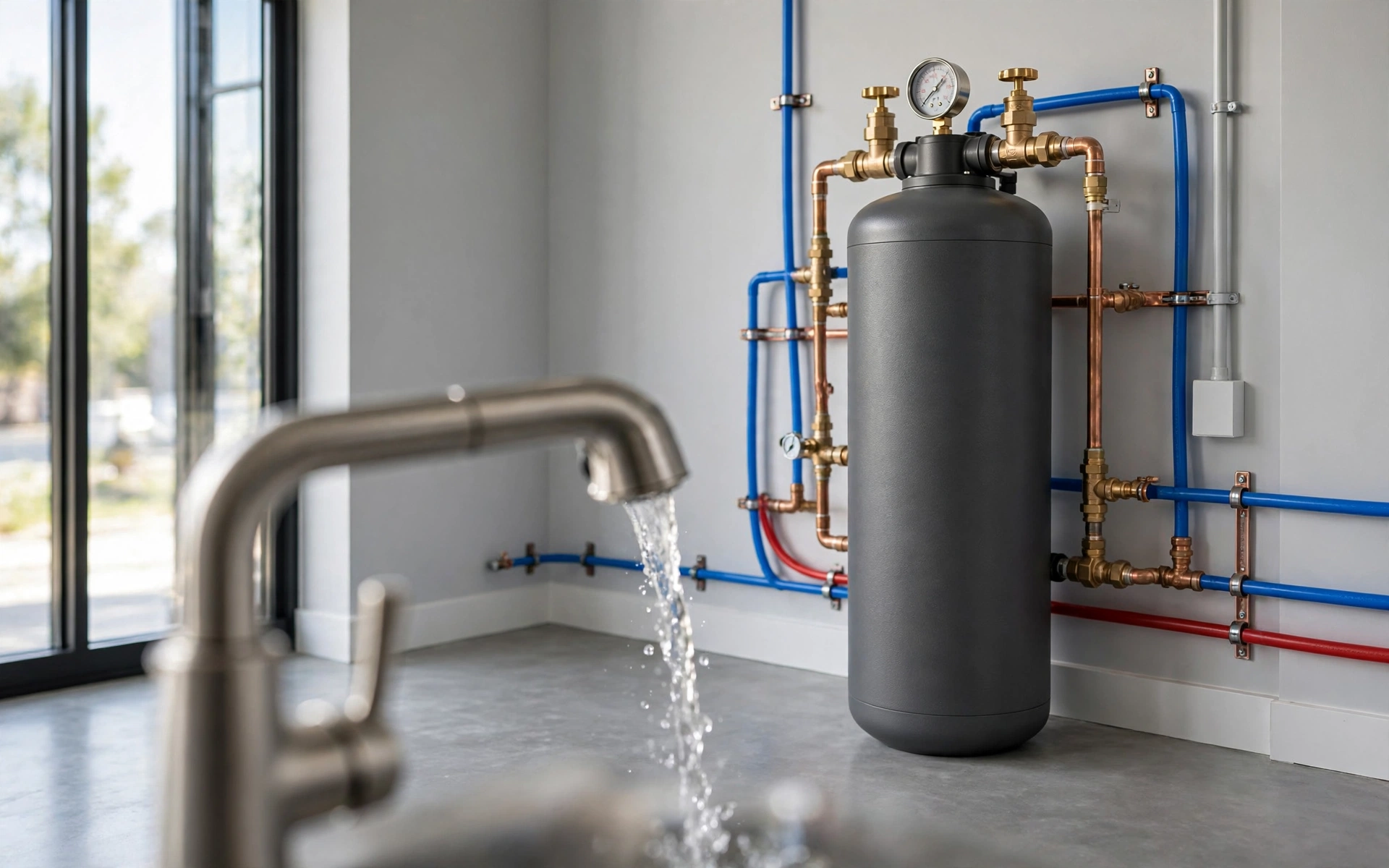
5 Mistakes When Buying a Whole House Water Filter
5 Mistakes When Buying a Whole House Water Filter Buying a whole house water filter looks straightforward until you install it and watch your shower pressure...
Review
5 Mistakes When Buying a Whole House Water Filter
5 Mistakes When Buying a Whole House Water Filter Buying a whole house water filter looks straightforward until you install it and watch your shower pressure...
Fast answer
5 Mistakes When Buying a Whole House Water Filter Buying a whole house water filter looks straightforward until you install it and watch your shower pressure...
Our top picks
5 Mistakes When Buying a Whole House Water Filter
Buying a whole house water filter looks straightforward until you install it and watch your shower pressure vanish or your water heater fill with scale. The five most common whole house water filter buying mistakes—ignoring hard water chemistry, underestimating flow rate needs, overlooking long-term maintenance costs, skipping brand comparisons, and assuming one filter removes everything—cost homeowners thousands in plumbing repairs and premature replacements. Here is how to avoid every one of them.
Why Most Whole House Water Filter Purchases Fail
Most whole house water filter purchases fail because buyers focus on upfront price and contaminant claims while ignoring flow rate physics, hard water chemistry, and total cost of ownership over five years. A system that looks perfect on a product page can create pressure bottlenecks, leave scale minerals untreated, or require filter replacements that double your annual spending. The fix is treating your purchase as a plumbing engineering decision, not a simple appliance buy.
Whole home water filters treat all water entering a household, providing filtration for every tap, shower, toilet, and appliance. They extend the lifespan of plumbing fixtures and appliances, reduce scale buildup, and improve taste and odor (Source: HomeWater). But only when sized and specified correctly for your specific water profile.
A whole house filter that ignores your water chemistry is just an expensive pipe fitting.
Mistake 1: Ignoring Hard Water and Scale Buildup
Standard whole house carbon filters do not remove calcium or magnesium—the minerals that cause hard water scale. If you buy a basic carbon-only system expecting it to eliminate the white crusty buildup on your faucets, you will be disappointed. Hard water requires a dedicated descaler, water conditioner, or salt-based softener paired with your filtration system.
Calcium and magnesium scale accumulates inside water heaters, dishwashers, and pipe walls, reducing efficiency and shortening appliance lifespans. The Pelican PSE1800 combines whole house filtration with a descaler that targets scale buildup directly, making it a strong choice for homes with hardness above 7 grains per gallon (Source: WaterTechAdvice). Before purchasing any system, pull your local water utility's annual quality report and check the hardness number. If it exceeds 7 gpg, prioritize a system with integrated descaling or plan to add a conditioner module.
The fix: Test your water hardness first. If it is above 7 gpg, choose a system like the Pelican PSE1800 or add a conditioner to your Aquasana Rhino setup.
Mistake 2: Underestimating Flow Rate Requirements
An undersized whole house filter creates a pressure bottleneck that drops water flow every time multiple fixtures run simultaneously. For a household with three or more bathrooms, you need a system rated for at least 12 to 15 gallons per minute (GPM) to maintain consistent pressure during morning routines when showers, toilets, and faucets run at the same time.
The physics are simple: water enters through a single main line, passes through the filter media, and splits to every fixture. If the filter media creates too much resistance, pressure drops downstream. The Pelican Premium Series uses a dual-tank design specifically to reduce flow resistance and maintain high GPM even under peak demand (Source: WaterTechAdvice). A family of six using 300 or more gallons per day on a 10 GPM filter will notice shower pressure drops during peak hours.
Rule of thumb: Count your bathrooms and add 3 GPM per bathroom as a baseline. A 3-bathroom home needs roughly 12 GPM minimum. Larger homes with irrigation systems or multiple kitchens should target 15 or more GPM. These figures reflect general industry guidelines for average household demand based on fixture flow rates.
Flow rate is the single most ignored specification that determines whether your whole house filter feels invisible or intrusive.
Mistake 3: Neglecting Long-Term Maintenance Costs
The true cost of a whole house water filter includes the upfront purchase price, installation, and every filter replacement over five years. Cheap systems with short filter lifespans often cost more long-term than premium systems with extended capacity.
The Aquasana Rhino offers up to 1 million gallons of filtration capacity. At an average household usage of approximately 100,000 gallons per year, that translates to roughly 10 years before a tank replacement (Source: WaterTechAdvice). Budget alternatives requiring annual filter swaps at $100 to $300 per change accumulate quickly over five years.
When comparing systems, calculate total cost of ownership (TCO) using this formula: upfront cost + (annual filter replacement cost × 5) + estimated installation. Pelican products include lifetime warranties on tanks and valves, which eliminates replacement tank costs entirely (Source: WaterTechAdvice). The cheaper upfront option often becomes the more expensive five-year investment.
| Cost Factor | Budget System | Aquasana Rhino | Pelican Premium |
| Upfront Cost | Low | Mid-High | Mid-High |
| Filter Lifespan | 6 to 12 months | Up to 1M gallons | Extended dual-tank |
| Warranty | 1 to 3 years | Limited warranty | Lifetime |
| 5-Year TCO | High (frequent replacements) | Moderate | Lower (longer intervals) |
Cheap filters are expensive when you count five years of replacements and missed warranty coverage.
Mistake 4: Choosing Without Comparing Brand Warranties and Technology
Aquasana and Pelican dominate the premium whole house filter market, but they solve different problems. Aquasana Rhino systems focus on broad-spectrum contaminant removal—reducing chlorine, heavy metals, organic chemicals, industrial solvents, pesticides, and herbicides—making them ideal for homes on municipal water with chemical contamination concerns (Source: WaterTechAdvice). Pelican systems prioritize high flow rates, extended filter life through dual-tank designs, and integrated descaling for hard water households.
The Aquasana Rhino can be fitted with additional water conditioners and UV filtration units for comprehensive treatment, giving it modularity for complex water profiles. The Pelican Premium Series delivers superior flow rates out of the box and carries a lifetime warranty that provides long-term peace of mind. Pelican products are generally positioned at a competitive price point relative to Aquasana when factoring in warranty coverage, though specific model pricing varies (Source: WaterTechAdvice).
Choose Aquasana Rhino if: Your primary concern is contaminant removal (heavy metals, chemicals, chlorine) and you want a proven, modular system.
Choose Pelican Premium if: You have hard water, a large household with high flow demands, and want lifetime warranty protection.
Mistake 5: Assuming One Filter Removes Everything
No single whole house filter removes every contaminant in your water supply. Carbon media excels at chlorine, volatile organic compounds (VOCs), and taste and odor improvement but does not remove dissolved hardness minerals, bacteria, or certain heavy metals. If your water contains biological contaminants, you need a UV filtration stage. If it contains lead or arsenic, you need specialized media such as KDF or activated alumina designed for heavy metal reduction.
The UPSTREAM 4-Stage Whole Home Water Filter demonstrates this multi-stage approach, combining sediment pre-filtration, carbon media, and specialized stages to address different contaminant classes (Source: HomeWater). Beware of marketing claims that promise a single cartridge handles every water quality issue. Start with a water test, identify your specific contaminants, and build a system that matches each problem to the correct filtration technology.
The fix: Get a certified water test before buying. Match each contaminant to its correct filtration stage: carbon for chlorine and VOCs, descaler or softener for hardness, specialized media for heavy metals, and UV for biological safety.
Decision Framework: How to Choose the Right System
Follow this five-step checklist to avoid every mistake above and select a system that fits your home.
Step 1: Test your water quality. Request your local water utility's annual Consumer Confidence Report or send a sample to a certified lab. Identify hardness (gpg), chlorine levels, and any heavy metal or biological concerns.
Step 2: Calculate your household GPM needs. Count bathrooms and add 3 GPM per bathroom as a baseline. Add 2 to 3 GPM for irrigation systems or high-demand appliances. A 3-bathroom home typically needs 12 GPM minimum; larger homes should target 15 or more GPM.
Step 3: Identify your primary contaminants. Match each issue to the correct technology: hardness above 7 gpg requires a descaler or softener; chlorine and VOCs require carbon media; heavy metals require KDF or specialized media; bacteria or cysts require UV or sub-micron filtration.
Step 4: Compare total cost of ownership. Use the TCO formula: upfront cost + (annual filter replacement cost × 5) + installation. Factor in warranty coverage. A system with a lifetime warranty and 1 million gallon capacity will almost always outperform a budget unit requiring annual filter swaps.
Step 5: Verify warranty terms and installation requirements. Confirm what the warranty covers (tanks, valves, media, labor) and whether professional installation is required to keep it valid. Check whether the manufacturer offers bypass valves and modular add-ons for future upgrades.
Test first, size second, match technology third, and calculate five-year cost before you buy.
FAQ: Addressing Common Buyer Objections
What size whole house water filter do I need for a large home? Size your system by flow rate (GPM), not physical dimensions. Homes with 4 or more bathrooms and high daily usage need systems rated for 15 or more GPM with large-capacity tanks to maintain pressure during peak demand.
Do whole house water filters reduce water pressure? Properly sized systems maintain pressure. Undersized filters create bottlenecks that reduce flow when multiple fixtures run simultaneously. Always match the GPM rating to your household peak demand.
How much does a whole house water filter cost to install and maintain? Professional installation typically ranges from $500 to $2,000 depending on plumbing complexity and local labor rates. Annual maintenance depends on filter lifespan and replacement frequency. Premium systems like the Aquasana Rhino with 1 million gallon capacity reduce yearly costs significantly compared to budget systems requiring annual filter swaps.
Are whole house water filters worth the investment? Yes, for homes with water quality concerns, hard water, or large families. Whole home systems are cheaper per gallon than point-of-use filters and protect every appliance and plumbing fixture in the house (Source: HomeWater).
What is the lifespan of a whole house water filter? Lifespan varies by model and usage. Premium systems like the Aquasana Rhino last up to 1 million gallons, which covers an average household for up to 10 years. Standard carbon systems require filter changes every 6 to 12 months.
Can I install a whole house water filter myself? DIY installation is possible for homeowners with plumbing experience. Professional installation is recommended for complex setups involving descalers, UV units, or bypass valves, and may be required to maintain warranty coverage.
Recommended Resources
What size whole house water filter do I need for a large home?
Do whole house water filters reduce water pressure?
How much does a whole house water filter cost to install and maintain?
Are whole house water filters worth the investment?
What is the lifespan of a whole house water filter?
Can I install a whole house water filter myself?
Recommended Resources
About the author
House By Saay
Editorial contributor for House By Saay, focused on clear, practical, reader-first buying guidance.
Sources
- https://www.homewater.com/blog/top-7-best-whole-home-water-filters-of-2024
- https://watertechadvice.com/aquasana-vs-pelican/
- https://www.aquasana.com/whole-house-water-filters
- https://www.pelicanwater.com/whole-house-water-filters/
- https://www.homewater.com/blog/top-7-best-whole-home-water-filters-of-2024
- https://watertechadvice.com/aquasana-vs-pelican/
- https://www.aquasana.com/whole-house-water-filters
- https://www.pelicanwater.com/whole-house-water-filters/
Keep reading
Related articles
Essential Accessories for Your New Whole House Filter Setup
Essential Accessories for Your New Whole House Filter Setup A whole house water filter is only as reliable as its support infrastructure, and most buyers dis...
5 Mistakes When Buying a Countertop RO System: A Verification Guide
5 Mistakes When Buying a Countertop RO System Countertop reverse osmosis systems promise restaurant-quality water without under-sink plumbing, yet many units...
Pelican vs Aquasana: Best Whole House Filter for Hard Water
Pelican vs Aquasana: Best Whole House Filter for Hard Water Hard water destroys plumbing fixtures, shortens appliance lifespans, and leaves stubborn scale de...
Stop Hard Water Stains: Best Whole-House Filter and Descaler Systems
Stop Hard Water Stains: Best Whole-House Filter and Descaler Systems You spent $800 on a whole-house filter and the white crust on your showerhead keeps comi...
Comments
Join the conversation
Leave a simple comment about 5 Mistakes When Buying a Whole House Water Filter.
No comments yet. Be the first to comment.