As an Amazon Associate I earn from qualifying purchases.
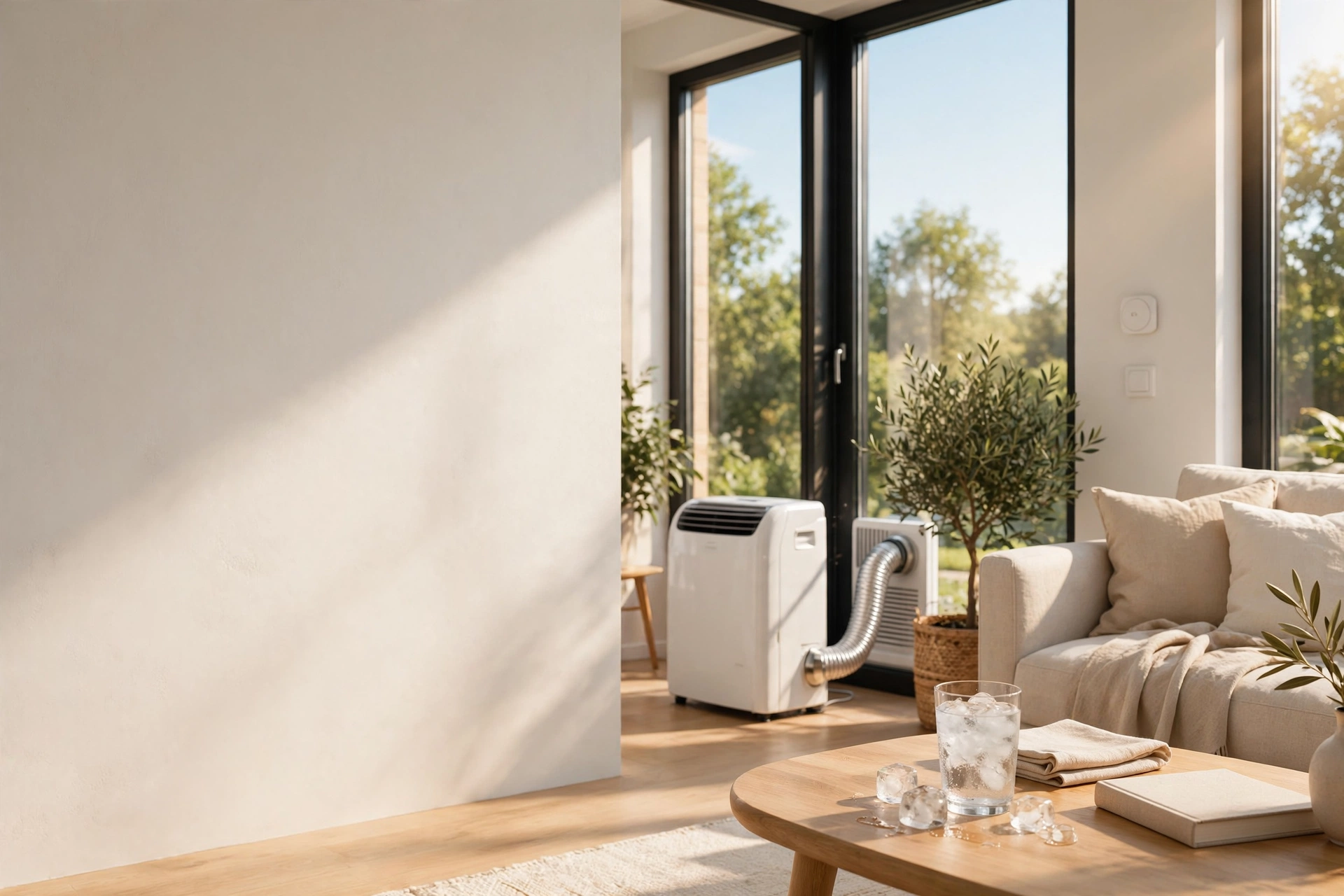
5 Costly Mistakes When Buying Your First Portable AC
5 Costly Mistakes When Buying Your First Portable AC Buying a portable air conditioner without understanding its real cooling power and operating costs leads...
Review
5 Costly Mistakes When Buying Your First Portable AC
5 Costly Mistakes When Buying Your First Portable AC Buying a portable air conditioner without understanding its real cooling power and operating costs leads...
Fast answer
Buying your first portable air conditioner can be costly if you overlook key factors like true cooling capacity, energy efficiency, hose design, noise, and drainage. This guide reveals five costly mistakes to avoid for a budget friendly, effective cooling solution.
- The article's unique value is the 'Portable AC Hidden Cost Calculator' framework woven throughout: it teaches readers to quantify the long-term financial impact (BTU deficit + energy inefficiency) of portable ACs and provides a clear, actionable decision tree that prioritizes the reader's constraints (rental, window type) over marketing claims, which competitors often fail to do.
- A 12,000 BTU portable AC typically cools like a 6,000-8,000 BTU window unit due to design limitations. Source: https://www.hvacbase.org/portable-vs-window-ac
- Portable ACs require sizing 50% larger than calculated room needs for adequate cooling. Source: https://www.hvacbase.org/portable-vs-window-ac
- Window air conditioners cost 40-60% less to operate than portable ACs. Source: https://www.hvacbase.org/portable-vs-window-ac
- Portable ACs are generally louder because the compressor is inside the room. Source: https://www.goodhousekeeping.com/what-to-buy/a71353906/portable-vs-window-ac/
Our top picks
5 Costly Mistakes When Buying Your First Portable AC
Buying a portable air conditioner without understanding its real cooling power and operating costs leads to wasted money and discomfort. A 12,000 BTU portable AC often cools like an 8,000 BTU window unit but costs 40-60% more to run. Avoid these mistakes by sizing up by 50%, choosing dual-hose models, and opting for portable units only when window ACs are not feasible.
Why does my portable AC’s BTU rating not match its cooling performance?
Portable AC BTU ratings often overstate actual cooling power due to different testing standards. Portable units use the Seasonally Adjusted Cooling Capacity (SACC) rating, reflecting real-world performance and typically lower than the older ASHRAE rating used for window units. For example, a 12,000 BTU portable AC might have a SACC rating near 8,000 BTU, meaning it cools less effectively than the number suggests.
To size correctly, multiply your calculated BTU need by 1.5 for portable ACs.
| Room Size (sq ft) | Window AC BTU Needed | Portable AC BTU Needed (x1.5) |
| 150 | 5,000 | 7,500 |
| 300 | 7,000 | 10,500 |
| 400 | 8,000 | 12,000 |
For instance, the Garvee 3-in-1 Portable AC 14 advertises 14,000 BTU but has a verified SACC rating of about 9,300 BTU. The BLACK+DECKER BPACT10WT 10 advertises 10,000 BTU but has a SACC rating near 5,500 BTU. Always check the SACC rating to avoid under-sizing.
The BTU number on the box is often an illusion; always look for the SACC rating to understand true cooling power.
How much more does a portable AC cost to operate compared to a window unit?
Portable air conditioners cost 40-60% more to operate annually than window units of comparable cooling capacity due to less efficient heat exchange and internal compressors.
For example, cooling a 400 sq ft room for 8 hours daily over a 90-day summer might cost about $180 with a portable AC versus $110 with a window unit, assuming average U.S. electricity rates.
| Unit Type | BTU Rating | Estimated Seasonal Energy Cost |
| Portable AC | 12,000 | $180 |
| Window AC | 8,000 | $110 |
Total cost of ownership includes purchase price plus energy costs. Window units like the Midea 10,000 BTU U-Shaped Smart Inverter Window AC and Frigidaire 14,000 BTU Smart Window AC offer significant energy savings. If portability is essential, inverter portable models like the Midea Duo 14,000 BTU improve efficiency and reduce operating costs.
The initial price is only part of the cost; energy bills can double with portable ACs if you ignore efficiency.
Why should I avoid single-hose portable ACs for primary cooling?
Single-hose portable ACs exhaust indoor air outside, creating negative pressure that pulls warm, humid air back into the room, reducing cooling efficiency.
Single-hose units use one hose to expel hot air but draw replacement air from inside the room through gaps, making the unit work harder and cool less effectively. Dual-hose models use one hose to bring in outside air to cool the condenser and another to exhaust hot air, maintaining balanced pressure and better performance.
| Feature | Single-Hose AC | Dual-Hose AC |
| Air Intake Source | Indoor air (negative pressure) | Outside air (balanced) |
| Cooling Efficiency | Lower | Higher |
| Suitable Use | Small rooms, supplemental | Primary cooling, larger rooms |
The ZAFRO 14,000 BTU Dual Hose Inverter Portable AC is a top choice for efficient cooling in hot climates. The DREO 515S 12,000 BTU single-hose model suits smaller spaces or secondary cooling but with efficiency trade-offs.
Single-hose units can sabotage their own cooling by pulling warm air back inside; dual-hose designs avoid this costly mistake.
How loud are portable air conditioners and how can I reduce noise?
Portable ACs are generally louder than window units because their compressors run inside the room, producing 50-60 decibels compared to 40-50 decibels for window units.
Noise can disrupt bedrooms or offices. To minimize noise, place the unit on a vibration-absorbing mat, keep the exhaust hose short and straight, and position the AC away from sleeping or working areas.
Inverter models like the Midea Duo 14,000 BTU and DREO 515S 12,000 BTU offer variable-speed compressors that reduce noise at lower settings. The Midea 10,000 BTU U-Shaped Window AC is notably quiet and energy-efficient.
| Model | Noise Level (dB) | Noise Reduction Tips |
| ZAFRO 14,000 BTU Dual Hose | ~55 | Use vibration mat, short hose, distance |
| Midea Duo 14,000 BTU | ~50 (variable) | Variable speed compressor reduces noise |
| Midea U-Shaped Window AC | ~40-45 | Quieter design, outside compressor |
Noise is a hidden cost of portability; smart placement and inverter technology can keep it manageable.
How do I manage drainage and maintenance for a portable AC?
Many portable ACs collect moisture internally and require frequent draining, especially in humid climates.
Drainage methods vary:
- Manual draining requires regularly emptying a water tank.
- Self-evaporative models reduce water buildup by evaporating moisture but are less effective in very humid conditions.
- Continuous drain hose setups allow constant drainage but need nearby drain access.
Filters typically require monthly cleaning or replacement to maintain airflow and efficiency.
| Drainage Type | Pros | Cons |
| Manual Drain | Low cost, simple | Frequent emptying needed |
| Self-Evaporative | Less frequent draining | Less effective in very humid conditions |
| Continuous Drain Hose | Hands-free, ideal for humid areas | Requires drain access |
The Garvee 3-in-1 Portable AC 14 and Midea Duo 14 offer self-evaporative systems, while budget models like BLACK+DECKER BPACT10WT 10 rely on manual draining.
Neglecting drainage can cause musty smells and reduced performance; choose a drainage method that fits your climate and lifestyle.
Portable AC vs. Window AC: The Ultimate Decision Guide
Choosing between a portable and window air conditioner depends on your installation options, cooling needs, and budget.
If you can install a window AC, it is almost always the smarter, cheaper, and quieter choice. Window units offer 40-60% lower operating costs and better cooling efficiency.
If you cannot install a window AC due to rental restrictions, window type, or temporary needs, a portable AC is your alternative. In this case, prioritize dual-hose models for better efficiency and plan for drainage and noise management.
Decision Framework:
- Can you install a window AC? If yes, choose a window unit like the Midea 10,000 BTU U-Shaped or Frigidaire 14,000 BTU Smart Window AC.
- If no, do you need primary or supplemental cooling? For primary, choose dual-hose portable ACs like the ZAFRO 14,000 BTU Dual Hose or Midea Duo 14,000 BTU.
- For supplemental or smaller spaces, single-hose models like the DREO 515S 12,000 BTU may suffice but expect lower efficiency.
- Consider your climate: high humidity requires drainage solutions; hot climates benefit from dual-hose designs.
- Budget constraints may lead to options like the BLACK+DECKER BPACT10WT 10, but be aware of lower effective cooling power.
This framework helps you avoid costly mistakes by matching your needs with the right technology and sizing.
Understanding your constraints and priorities is key to choosing the right AC and avoiding hidden costs.
Visual Recommendations:
- Infographic comparing advertised BTU vs. real cooling power (SACC) for portable and window ACs.
- Diagram illustrating airflow differences between single-hose and dual-hose portable ACs.
- Text-based decision tree flowchart guiding readers through AC selection based on installation feasibility, cooling needs, and budget.
This article equips you to make an informed, cost-effective choice for your cooling needs.
Recommended Resources
How do I know what size portable air conditioner I need to cool my room?
How often do I have to clean or replace the filter of my portable air conditioner?
Where in the room should I put my portable air conditioner?
Can I use a portable AC in any room?
Which AC is more energy efficient, portable or window?
Which AC is easier to maintain, portable or window?
Recommended Resources

Lead researcher and home comfort specialist at House By Saay. Specializes in ergonomic design, sleep technology, and consumer product durability analysis.
Sources
- https://www.thisoldhouse.com/heating-cooling/best-portable-air-conditioner
- https://www.hvacbase.org/portable-vs-window-ac
- https://www.goodhousekeeping.com/what-to-buy/a71353906/portable-vs-window-ac/
- https://www.rtings.com/air-conditioner/reviews/best/portable
- https://www.thisoldhouse.com/heating-cooling/best-portable-air-conditioner
- https://www.hvacbase.org/portable-vs-window-ac
- https://www.goodhousekeeping.com/what-to-buy/a71353906/portable-vs-window-ac/
- https://www.rtings.com/air-conditioner/reviews/best/portable
Comments
Join the conversation
Leave a simple comment about 5 Costly Mistakes When Buying Your First Portable AC.
No comments yet. Be the first to comment.